AI hype TRAcking Project

What is this?

AITRAP is a very informal project to track articles with some bearing on the current AI hype cycle. Obviously, it is biased towards the news outlets I follow as well as some technical literature on the things that interest me and I think are particularly relevant for hype or policy. (If I'm missing an entire thread of good information, please tell me — see email info immediately below)

Eventually, I will enable a way for readers to submit new links, as well as to comment on — such as by adding hashtags or short summaries of the important take-aways — to the individual entries. But until that happy day, feel free to email me at jonathan.poritz@gmail.com if you want me to add something to this list, be it

If you do send me such information, please be as clear, concise, and complete as possible.

The list of articles:

  1. www.wheresyoured.at :
    Dead Money
  2. truths-and-loves.ghost.io :
    AI Has Already Killed Academia as we Know it
  3. garymarcus.substack.com :
    Translating Sam - Marcus on AI
  4. hedgehoglibrarian.com :
    The ACToRS in AI Framework
  5. deadsimpletech.com :
    LLMs on the boundary
  6. www.wheresyoured.at :
    Where're All The AI Chips?
  7. digital-strategy.ec.europa.eu :
    Digital Omnibus Regulation Proposal
  8. robertreich.substack.com :
    The Rise of AI Populism - Robert Reich
  9. mathandai.org :
    Declaration — Math and AI
  10. turntrout.com :
    Why I Left Google DeepMind
  11. dair-institute.org :
    Whose Categories? Whose AI?
  12. www.wheresyoured.at :
    Hyperscale Normalization
  13. www.bis.org :
    The AI investment race
  14. www.bis.org :
    The AI investment race
  15. infernalcode.com :
    Your AI Agent Has Root
  16. open.library.okstate.edu :
    AI + OER Case Studies: A DOERS Project
  17. earendil.com :
    What is a Harness?
  18. zedshaw.com :
    Authoritarianism of Code
  19. engineering.myhoai.com :
    A simple fix for LLM tail latency
  20. www.seangoedecke.com :
    I got an email about resistance
  21. lapcatsoftware.com :
    The obligatory AI post
  22. chreke.com :
    I Fired My AI Assitant
  23. www.lesswrong.com :
    Why I Left Google DeepMind
  24. www.404media.co :
    Being a Luddite Is Fun Again
  25. functional.computer :
    LLMs can't program
  26. blnreview.de :
    Un-Doing Philosophy
  27. www.bloodinthemachine.com :
    What is an 'Elon Musk'? - by Brian Merchant
  28. www.wheresyoured.at :
    The Subprime Data Center Crisis
  29. aiedusimplified.substack.com :
    Some Big Picture Resources - by Lance Eaton
  30. www.wheresyoured.at :
    The OpenAI Bubble
  31. sustainability.aboutamazon.com :
    Reports - Amazon Sustainability
  32. www.wheresyoured.at :
    Let AI Burn
  33. shkspr.mobi :
    I'm just so bored of AI
  34. 2ndbreakfast.audreywatters.com :
    Financial Nonsense
  35. www.aaron-gustafson.com :
    Can Your AI Pass the Accessibility Test?
  36. www.nationalacademies.org :
    Implications of AI for Cybersecurity
  37. www.wheresyoured.at :
    The AI Industry Is Losing
  38. lilianweng.github.io :
    Scaling Laws, Carefully
  39. www.sovranita-digitale.it :
    Osservatorio Sovranità Digitale in Italia
  40. www.playlab.ai :
    JOSHUA for LACCD
  41. www.wheresyoured.at :
    Cargo Culture
  42. blog.mcchristie.com :
    NELE: June 2026
  43. sites.bu.edu :
    Toasters With Feelings
  44. arxiv.org :
    Will GPT-4 Run DOOM?
  45. adewynter.github.io :
    A Perceptron in Age of Empires II
  46. www.wheresyoured.at :
    AI's Brokenomics
  47. opensourceaimustwin.com :
    Opensource AI Must Win
  48. zenodo.org :
    Models
  49. www.mcsweeneys.net :
    AI Economics for Dummies
  50. storage.courtlistener.com :
    CNN v Perplexity AI
  51. garymarcus.substack.com :
    Breaking news, and how the end might begin
  52. www.myfloridalegal.com :
    openai-filed-stamped-complaint.pdf
  53. airesistlist.org :
    The AI Resist List
  54. works.hcommons.org :
    KC Works
  55. demos.co.uk :
    Demos
  56. www.wheresyoured.at :
    AI Doesn't Have ROI
  57. www.wheresyoured.at :
    Revenge of The Business Idiot
  58. pivot-to-ai.com :
    STOP DOING SEARCHES
  59. www.hackyexperiments.com :
    The Revenge of The Measurers
  60. korbonits.com :
    The Verification Problem
  61. rebootdemocracy.ai :
    AI Can Help Our Leaders Be Better
  62. www.forbes.com :
    AI Is Devouring All The Cash
  63. labor.dair-institute.org :
    Luddite Lab
  64. www.wheresyoured.at :
    AI Is Too Expensive
  65. new.digitalpublicgoods.net :
    Digital Public Goods Alliance
  66. datasociety.net :
    Data & Society — Scam GPT
  67. www.etui.org :
    Digitalisation | etui
  68. blog.dougbelshaw.com :
    The (AI) lottery is already running
  69. www.insidehighered.com :
    Faculty Push Back Against OpenAI Deals
  70. robertreich.substack.com :
    The AI Job Apocalypse Is Already Happening
  71. graile.ai :
    Home - GRAILE
  72. www.wheresyoured.at :
    Where Are All The Data Centers?
  73. www.businessofgovernment.org :
    Using AI to Improve Child Welfare.pdf
  74. aiedusimplified.substack.com :
    Exploring Agentic AI - by Lance Eaton
  75. garymarcus.substack.com :
    Agents and ROI
  76. www.wheresyoured.at :
    Am I Meant To Be Impressed?
  77. katedaviesdesigns.com :
    Knitting Bullshit
  78. garymarcus.substack.com :
    The growing AI backlash - Marcus on AI
  79. www.hollywoodreporter.com :
    OpenAI Shutting Down Sora Video App
  80. aiedusimplified.substack.com :
    What's my line? - by Lance Eaton
  81. anastasiastasenko.substack.com :
    The Will to Generate - by Anastasia Stasenko
  82. licensingafricandatasets.com :
    LicensingAfricanDatasets
  83. www.thedriftmag.com :
    Directing the Herd - The Drift
  84. www.axios.com :
    Axios AI+
  85. www.marketplace.org :
    How much is too much to spend on AI?
  86. www.wheresyoured.at :
    AI's Economics Don't Make Sense
  87. ozark.hendrix.edu :
    To my students
  88. olivia.science :
    We've been here before!
  89. employees.oneonta.edu :
    Profession
    By Isaac Asimov
  90. www.coursera.org :
    AI for Productivity | Coursera
  91. langleyshields.substack.com :
    Behind the Shelves - Alison Langley
  92. www.insidehighered.com :
    How DOGE Gutted the NEH in 22 Days
  93. districtadministration.com :
    How AI can guide us in reimagining assessment
  94. toda.org :
    404 Not Found
  95. www.npr.org :
    Page Not Found : NPR
  96. rebootdemocracy.ai :
    How Governments are Using AI
  97. www.noemamag.com :
    How To Save Democracy From AI
  98. openknowledge.worldbank.org :
    Open Knowledge Repository
  99. nationalcenterforstatecourts.shinyapps.io :
    AIReadinessGuide
  100. www.reuters.com :
    We can't find that page
  101. www.govtech.com :
    AI 50
  102. openforumai.github.io :
    Public-Sector AI Curriculum
  103. mail.cyberneticforests.com :
    Thoughts on Hinton
  104. rebootdemocracy.ai :
    friend.com or foe.com?
  105. labs.cloudsecurityalliance.org :
    Lab Space
  106. timesofindia.indiatimes.com :
    Is AI Good For Democracy? - The Times of India
  107. www.lawfaremedia.org :
    The Promptware Kill Chain | Lawfare
  108. red.anthropic.com :
    0-Days \ red.anthropic.com
  109. www.ivy.com :
    Insight Detail
  110. www.amazonclimatejustice.org :
    AI Open Letter — AECJ
  111. www.wheresyoured.at :
    I Will Never Respect A Website
  112. www.wheresyoured.at :
    AI Is Really Weird
  113. www.wheresyoured.at :
    The Subprime AI Crisis Is Here
  114. www.wheresyoured.at :
    The AI Industry Is Lying To You
  115. www.wheresyoured.at :
    Why Are We Still Doing This?
  116. www.wheresyoured.at :
    The Beginning Of History
  117. www.wheresyoured.at :
    On NVIDIA and Analyslop
  118. www.wheresyoured.at :
    NVIDIA Isn't Enron - So What Is It?
  119. www.wheresyoured.at :
    The Enshittifinancial Crisis
  120. www.authorsalliance.org :
    Copyright Winter is Coming (to Wikipedia?)
  121. eleonorapanto.substack.com :
    Lapilli #33 Ascesa e caduta delle civiltà
  122. www.experimental-history.com :
    Infinite midwit - by Adam Mastroianni
  123. aiedusimplified.substack.com :
    3 Years AI-go: Insights for the Future-Past
  124. aiedusimplified.substack.com :
    AI & Education: Jeremy Caplan & Lance Eaton
  125. www.bloodinthemachine.com :
    Five takeaways from an unhinged AI discourse
  126. www.youtube.com :
    Arvind on AI - YouTube
  127. aiedusimplified.substack.com :
    “You have to experience things firsthand.”
  128. designthinkingcomic.substack.com :
    (comic) Slop Machine - DESIGN THINKING!
  129. aiedusimplified.substack.com :
    Sharing 2025's Talks & Workshops - by Lance Eaton
  130. aiedusimplified.substack.com :
    A Few of My Favorite Things - by Lance Eaton
  131. aiedusimplified.substack.com :
    Where the AI Conversation Is Taking Shape
  132. aiedusimplified.substack.com :
    “But imagine if we could…” - by Lance Eaton
  133. www.bloodinthemachine.com :
    A code red for AI - by Brian Merchant
  134. aiedusimplified.substack.com :
    AI Priorities and the People’s Problem
  135. aiedusimplified.substack.com :
    Results May Vary - by Lance Eaton
  136. aiedusimplified.substack.com :
    New Publication: Documenting & Disclosing AI
  137. www.404media.co :
    Heads in the AI Slop Sand
  138. www.404media.co :
    Slopaganda and Sora, lol
  139. www.powerswitchaction.org :
    Stop the AI Surveillance Pipeline!
  140. www.404media.co :
    Grok Dox and Lost Dogs
  141. dealing-with-bots.coar-repositories.org :
    Dealing With Bots: A COAR Resource for Repository Managers: Home
  142. theaidigest.org :
    AI Village
  143. thaura.ai :
    Thaura
  144. ai4lam.org :
    Homepage - Ai4lam
  145. garymarcus.substack.com :
    F Cancer - by Gary Marcus - Marcus on AI
  146. curecancer.ai :
    AI vs Cancer
  147. garymarcus.substack.com :
    Erdosgate - by Gary Marcus - Marcus on AI
  148. www.bloodinthemachine.com :
    A brief history of techno-negativity
  149. www.bloodinthemachine.com :
    Actually, the left is winning the AI debate
  150. www.bloodinthemachine.com :
    The lines have been drawn - by Brian Merchant
  151. www.bloodinthemachine.com :
    Abolish the senses - by Brian Merchant
  152. www.bloodinthemachine.com :
    Lost in the slop layer - by Brian Merchant
  153. www.bloodinthemachine.com :
    What’s really going on with AI and jobs?
  154. aiedusimplified.substack.com :
    The Leadership Tension with AI in Education
  155. aiedusimplified.substack.com :
    Leading the Human Side of AI
  156. www.patreon.com :
    AI insurance draft | Patreon
  157. www.wheresyoured.at :
    Four Horsemen of the AIpocalypse
  158. papers.ssrn.com :
    How AI Destroys Institutions
  159. cyberlaw.stanford.edu :
    How AI Destroys Institutions
  160. galsapir.github.io :
    maps, territory and LMs
  161. leehanchung.github.io :
    The AI Great Leap Forward
  162. codeberg.org :
    Open Slopware
  163. ifin-intel.org :
    IFIN Generative AI Policy
  164. www.anildash.com :
    Endgame for the Open Web
  165. harshanu.space :
    CCC vs GCC - Harshanu
  166. www.joanwestenberg.com :
    The empire always falls
  167. ethanmarcotte.com :
    Propellant. — Ethan Marcotte
  168. tante.cc :
    Nothing to Declare
  169. aidirtylist.info :
    The AI Dirty List
  170. bavatuesdays.com :
    Who Pays for AI?
  171. www.baldurbjarnason.com :
    Have I hardened against LLMs?
  172. archive.org :
    Law and Technology
  173. dynomight.net :
    LLMs predict my coffee
  174. robertmaple.co.uk :
    Coding as a Game of Probabilities
  175. arxiv.org :
    Hyperagents
  176. www.404media.co :
    Slopaganda and Sora, lol
  177. www.josh.ing :
    Claude Composer
  178. www.garfieldtech.com :
    Selfish AI
  179. www.bloodinthemachine.com :
    There has to be a way - by Brian Merchant
  180. www.metropolitanreview.org :
    The Writers Came at Night
  181. justthebrowser.com :
    Just the Browser
  182. robhorning.substack.com :
    Artificial intentionality
  183. www.planetearthandbeyond.co :
    The AI Industry Is Starting To Unravel
  184. arpitbhayani.me :
    The Q, K, V Matrices
  185. simonwillison.net :
    2025: The year in LLMs
  186. animatedai.github.io :
    Animated AI
  187. jalammar.github.io :
    The Illustrated Transformer
  188. www.creativerightsinai.co.uk :
    Creative Rights In AI Coalition
  189. tante.cc :
    Against scale
  190. www.ilfattoquotidiano.it :
    Taja’, nun ce lassà
  191. www.ourcommons.ca :
    Petition e-7002 - Petitions
  192. people-work.io :
    The Junior Hiring Crisis
  193. www.marketplace.org :
    AI's role in improving accessibility
  194. storage.courtlistener.com :
    gov.uscourts.nysd.606655.716.0.pdf
  195. c2pa.org :
    content credentials
  196. tante.cc :
    Desire to Pop
  197. joshcollinsworth.com :
    Alchemy
  198. authorsalliance.substack.com :
    Copyright Winter is Coming (to Wikipedia?)
  199. data.commoncrawl.org :
    Common Crawl Archives 2013-2025
  200. dtdlab.virginia.edu :
    Co-Opting AI: Libraries - DTD Lab
  201. garymarcus.substack.com :
    5 recent, ominous signs for Generative AI
  202. www.insidehighered.com :
    A Way to Save the Essay (opinion)
  203. betterimagesofai.org :
    Better Images of AI
  204. whatisintelligence.antikythera.org :
    What is Intelligence? | Antikythera
  205. garymarcus.substack.com :
    Too big to fail?
    Get ready for chaos
  206. jetwilliams.com :
    From Prayers to Prompts
  207. www.project-syndicate.org :
    AI Is Hollowing Out Higher Education
  208. read.misalignedmag.com :
    misaligned bits #8: Slop Wave Coming
  209. securityboulevard.com :
    AI and the Golden Age of Surveillance
  210. 2ndbreakfast.audreywatters.com :
    The Coup
  211. pracap.com :
    An AI Addendum
  212. collectivefutures.blog :
    The infrastructure of meaninglessness
  213. www.404media.co :
    AI dystopia, now 5x faster
  214. ethanmarcotte.com :
    A right to copy.
  215. www.bloodinthemachine.com :
    The Luddite Renaissance is in full swing
  216. www.404media.co :
    AI Slop Invades the Office
  217. theoatmeal.com :
    Let's talk about AI art
  218. datasets-benchmarks-proceedings.neurips.cc :
    AI and the Everything in the Whole Wide World Benchmark
  219. www.wheresyoured.at :
    The Case Against Generative AI
  220. www.insidehighered.com :
    AI Hallucinations May Soon Be History
  221. www.oceancopyright.org :
    Upcoming Events | OCEAN
  222. blog.dshr.org :
    The Gaslit Asset Class
  223. www.alephic.com :
    The Magic of Claude Code
  224. blog.charliemeyer.co :
    LLMs Are the Ultimate Demoware
  225. www.tbray.org :
    GenAI Predictions
  226. www.oreilly.com :
    The Cognitive Shortcut Paradox
  227. jules.google :
    Introducing the Jules API
  228. jrfernandez.com :
    Whiteboarding with AI
  229. www.artificialintelligence-news.com :
    Public trust deficit is a major hurdle for AI growth
  230. www.worksinprogress.news :
    AI isn't replacing radiologists
  231. dl.acm.org :
    As we may think
  232. www.civicsoftechnology.org :
    No AI Gods, No AI Masters
  233. olivia.science :
    Crticial AI (literacy)
  234. www.theinformation.com :
    Are AI Valuations Bonkers?
  235. www.authorsalliance.org :
    Generative AI – Authors Alliance
  236. creativecommons.org :
    AI and the Commons: A Reading List
  237. www.insidehighered.com :
    Rise of the Incompetents (opinion)
  238. www.telegraph.co.uk :
    ChatGPT is driving people mad
  239. nationalcentreforai.jiscinvolve.org :
    AI Tools Blog Home - Artificial intelligence
  240. events.zoom.us :
    InnovateUS Workshop Series
  241. events.zoom.us :
    InnovateUS Workshop Series
  242. www.wheresyoured.at :
    How To Argue With An AI Booster
  243. www.insidehighered.com :
    More Law Schools Embrace AI
  244. www.insidehighered.com :
    Survey: College Students’ Views on AI
  245. www.insidehighered.com :
    AI Companies Roll Out Educational Tools
  246. aiedusimplified.substack.com :
    AI Syllabi Policies - A Look at the Collection
  247. fintechdystopia.com :
    Fintech Dystopia
  248. 2ndbreakfast.audreywatters.com :
    I Know What You Did Last Summer
  249. netwars.pelicancrossing.net :
    Passing the Uncanny Valley - net.wars
  250. read.misalignedmag.com :
    Misaligned, An Introduction
  251. www.platformer.news :
    My dinner with Altman
  252. www.smbc-comics.com :
    God as token prediction
  253. codemanship.wordpress.com :
    The LLM In The Room – Codemanship's Blog
  254. panbibliotekar.github.io :
    GAIDeT Declaration Generator
  255. www.aiweirdness.com :
    ChatGPT will apologize for anything
  256. www.wheresyoured.at :
    AI Is A Money Trap
  257. changelog.com :
    The smell of vibe coding
  258. garymarcus.substack.com :
    Slopocalypse Now
    The Horror
  259. writingslowly.com :
    Hot takes on our future with AI
  260. www.youtube.com :
    A No-Code Love Story | Fiverr
  261. www.techpolicy.press :
    The Myth of AGI | TechPolicy.Press
  262. reutersinstitute.politics.ox.ac.uk :
    Overview and key findings of the 2025 Digital News Report
  263. knowingmachines.org :
    Knowing Machines
  264. criticalai.org :
    The AI Hype Wall of Shame
  265. theconversation.com :
    Is ChatGPT making us stupid?
  266. mastodon.social :
    The Uberduck
    @uberduck@hachyderm.io
    I am now being required by my day job to use an AI assistant to write code. I have also been informed that my usage of AI assistants will be monitored and decisions about my career will be based on those metrics.
    I gave it an honest shot today, using it as responsibly as I know how: only use it for stuff I already know how to do, so that I can easily verify its output. That part went ok, though I found it much harder to context switch between thinking about code structure and trying to herd a bullshit generator into writing correct code.
    One thing I didn't expect, though, is how fucking disruptive it's suggestion feature would be. It's like trying to compose a symphony while someone is relentlessly playing a kazoo in your ear. It flustered me really quickly, to the point where I wasn't able to figure out how to turn that "feature" off. I'm noticing physical symptoms of an anxiety attack as a result.
    I stopped work early when I noticed I was completely spent. I don't know if I wrote more code today than I would have normally. I don't think I wrote better code, as the vigilance required is extremely hard for my particular brand of neurospicy to maintain.
    As far as the "write this function for me" aspect, I've noticed that I tend to use the mental downtime of typing out a function I've designed to let my brain percolate on the solution and internalize it so I have it in my working memory. This doesn't happen when I'm simply reviewing code written by something else. Reviewing code and writing it are completely separate activities for me. But there's nothing to keep my fingers and thoughts busy while I'm coming up with what to write next.
    I didn't think we were meant to live like this.
  267. www.booksandpublishing.com.au :
    Wiley, OUP confirm AI partnerships
  268. www.wheresyoured.at :
    The Hater's Guide To The AI Bubble
  269. mail.cyberneticforests.com :
    The Black Box Myth
  270. www.schneier.com :
    Where AI Provides Value
  271. danmcquillan.org :
    Decomputing as Resistance
  272. subscribe.transistor.fm :
    The AI Exodus Starts
  273. knru.polin.ski :
    Köln Wreckage / Spotifyckd
  274. askamina.ai :
    Ask Amina
  275. algorithmic-sabotage.github.io :
    Expanding the Offensiveness #
  276. digital-strategy.ec.europa.eu :
    The General-Purpose AI Code of Practice
  277. www.profgalloway.com :
    Bubble.ai
  278. www.tbray.org :
    The Real GenAI Issue
  279. www.mcsweeneys.net :
    Artificial Intelligence Cannot
  280. www.annualreviews.org :
    AI as Governance | Annual Reviews
  281. aiedusimplified.substack.com :
    Interview with Lori Looney about the AI Symposium
  282. www.wheresyoured.at :
    Make Fun Of Them
  283. ebildungslabor.de :
    Kurz notiert: CC Signals
  284. www.visualcapitalist.com :
    Visualizing Global AI Investment by Country
  285. nightshade.cs.uchicago.edu :
    Nightshade User's Guide
  286. github.com :
    cc-signals
  287. arcs.oregonstate.edu :
    OSU AI Week 2025
  288. garymarcus.substack.com :
    1984, but with LLM’s
  289. www.youtube.com :
    Sam Altman | The Future of AI
  290. www.wheresyoured.at :
    Sincerity Wins The War
  291. www.sciencedirect.com :
    Rethinking Eliminative Connectionism
  292. www.documentcloud.org :
    Open AI Court Order
  293. www.bmz-digital.global :
    The AI Policy Playbook
  294. hai-production.s3.amazonaws.com :
    AI Index Report 2025
  295. datadetoxkit.org :
    What’s the Buzz with AI?
  296. marendeepwell.com :
    Keynote: From Analogue to AI
  297. www.wheresyoured.at :
    Never Forget What They've Done
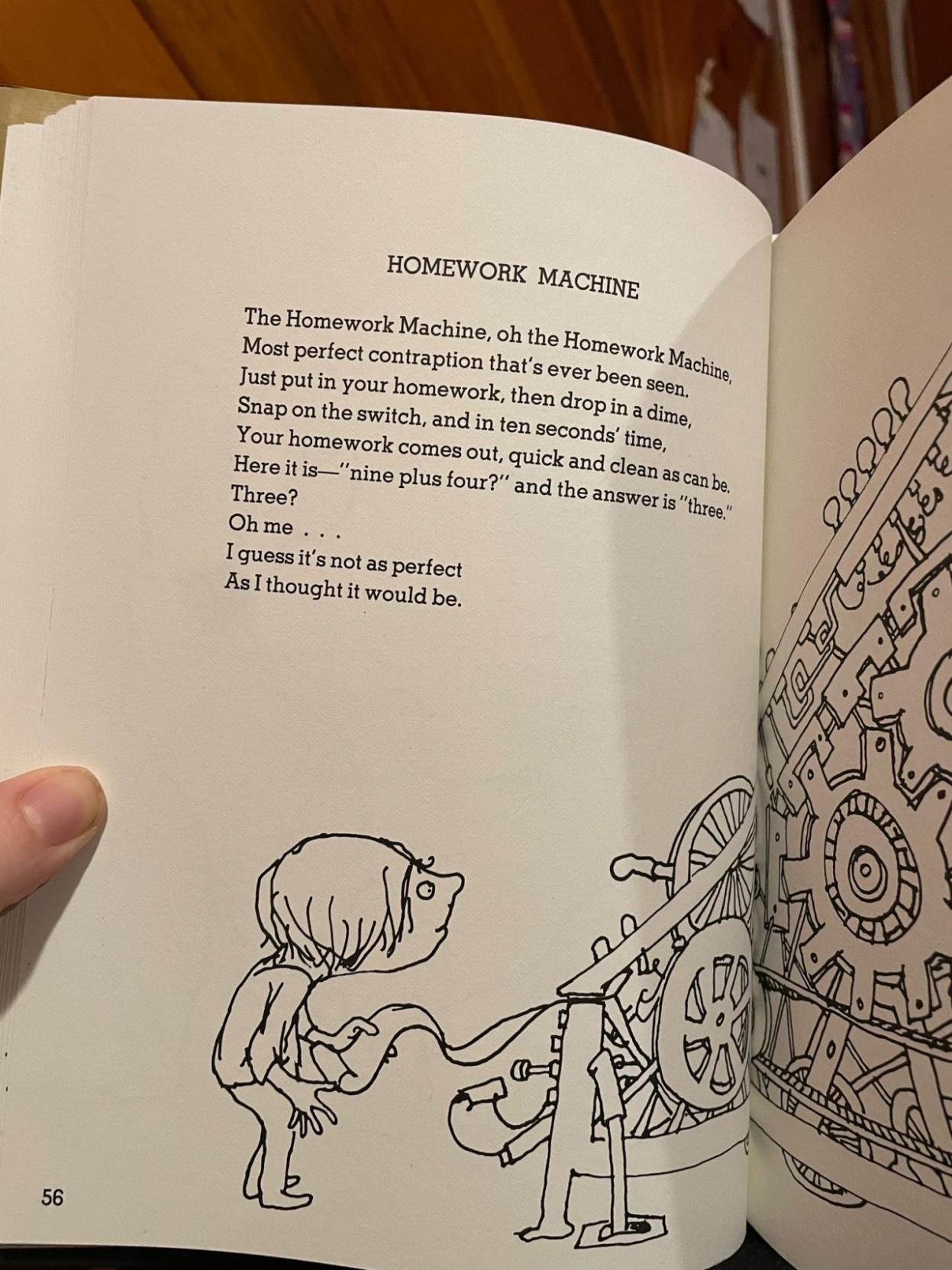
  298. asset.circumstances.run :
    Homework Machine by Shel Silverstein
  299. coalition-for-independent-tech-research.discourse.group :
    NEW VIDEO: How is AI helping advertisers skirt around EU law?
  300. www.youtube.com :
    Machine Learning video list
  301. www.de.ed.ac.uk :
    Teach AI Literacy Handbook
  302. digital-strategy.ec.europa.eu :
    The AI Continent Action Plan
  303. openfuture.eu :
    White Paper on Public AI
  304. openfuture.eu :
    Online Event on Public AI
  305. www.404media.co :
    Teachers Are Not OK
  306. arxiv.org :
    2406.10279v3.pdf
  307. aworkinglibrary.com :
    Toolmen
  308. www.wheresyoured.at :
    Desperate Times, Desperate Measures
  309. timothyburke.substack.com :
    Academia: Exploring AI Uses (I)
  310. arxiv.org :
    Densing Law of LLMs
  311. deadsimpletech.com :
    Keeping up appearances
  312. www.wheresyoured.at :
    The Era Of The Business Idiot
  313. en.m.wikipedia.org :
    Italian brainrot
  314. mastodon.social :
    Lauren Weinstein
    @lauren@mastodon.laurenweinstein.org
    #Google putting wrong medical advice in their #AI Overviews.
    This is not funny. It is not acceptable. Today I saw someone who had asked a health-related question to Google Search. The AI Overview presented mixed-up, wrong information. I urged the person to ignore the AI Overview and use the regular site links.
    They didn't know there were any regular site links, because the AI Overview filled essentially their entire window and they didn't know to scroll down. This is a common situation with busy, nontechie users.
    They have depended on Google to point them at accurate information for so many years, and now Google Search spews out convincing looking AI garbage. This is not an anomaly.
    Google's AI Overviews are full of wrong, partially wrong (even more dangerous!), and just plain misinformation. Answers that are completely reversed from supposed source pages because the AI didn't understand the wording. Measurements wrong. Math wrong.
    It doesn't matter how often AI Overviews are correct, because you NEVER KNOW when they're going to be wrong, either completely or partly (again, mixing true with false
    like contaminating a well).
    And now Google is trying to convince users to use "AI Search" instead
    "Hey Ma', no more list of blue links!"
    making it even harder to see that so many of their answers are, if you'll excuse the expression, bulls*it, sometimes dangerous as well.
    This is unconscionable. Frankly, whether Google understands this or not, this behavior is uncaring and evil. Apparently Google's leadership no longer feels any shame at all. Disgusting.
    May 21, 2025, 07:50 PM
  315. deplet.ing :
    The Copilot Delusion
  316. storage.googleapis.com :
    AlphaEvolve.pdf
  317. www.bloodinthemachine.com :
    Dismantling the Empire of AI with Karen Hao
  318. www.hostedinafrica.com :
    The time is now! - HiA Network
  319. aiandacademia.substack.com :
    Awareness of the AI cheating crisis grows
  320. ainowinstitute.org :
    A New AI Lexicon: Tequiologies
  321. darcynorman.net :
    bot traffic
  322. anntelnaes.substack.com :
    AI is theft --full stop
  323. www.project-syndicate.org :
    Europe Needs Its Own AI Infrastructure
  324. assets.ctfassets.net :
    4U50gyKQ6CJEAAKNUgBpXc--151507052025
  325. aiedusimplified.substack.com :
    GenAI: Copyight's Unacknowledged Offspring
  326. world-wisdom-offline-guide.lovable.app :
    OFFLINE AI - Education Without Internet
  327. metarelational.ai :
    MetaRelational AI
  328. www.bloodinthemachine.com :
    Did AI kill your job? - by Brian Merchant
  329. arxiv.org :
    2505.04588v1.pdf
  330. designthinkingcomic.substack.com :
    Which one is it?
  331. www.404media.co :
    The AI Slop Presidency
  332. mastodon.social :
    David Nash --@dpnash@c.im
    --@mzedp @necedema @Wyatt_H_Knott @futurebird @grammargirl Representative example, which I did *today*, so the “you’re using old tech!” excuse doesn’t hold up.
    I asked ChatGPT.com to calculate the mass of one curie (i.e., the amount producing a specific number of radioactive decays per second) of the commonly used radioactive isotope cobalt-60.
    It produced some nicely formatted calculations that, in the end, appear to be correct. ChatGPT came up with 0.884 mg, the same as Wikipedia’s 884 micrograms on its page for the curie unit.
    It offered to do the same thing for another isotope.
    I chose cobalt-14.
    This doesn’t exist. And not because it’s really unstable and decays fast. It literally can’t exist. The atomic number of cobalt is 27, so all its isotopes, stable or otherwise, must have a higher mass number. Anything with a mass number of 14 *is not cobalt*.
    I was mimicking a possible Gen Chem mixup: a student who confused carbon-14 (a well known and scientifically important isotope) with cobalt-whatever. The sort of mistake people see (and make!) at that level all the time. Symbol C vs. Co. Very typical Gen Chem sort of confusion.
    A chemistry teacher at any level would catch this, and explain what happened. Wikipedia doesn’t show cobalt-14 in its list of cobalt isotopes (it only lists ones that actually exist), so going there would also reveal the mistake.
    ChatGPT? It just makes shit up. Invents a half-life (for an isotope, just to remind you, *cannot exist*), and carries on like nothing strange has happened.
    This is, quite literally, one of the worst possible responses to a request like this, and yet I see responses like this *all the freaking time*.
  333. connect.oeglobal.org :
    Guessing Locations (poorly) With AI
  334. play.pocketcasts.com :
    How The AI Bubble Bursts
  335. law.stanford.edu :
    The Silicon Valley Effect
  336. 2ndbreakfast.audreywatters.com :
    Sycophancy as a Service
  337. www.robinsloan.com :
    Is it okay?
  338. ai.nejm.org :
    Who’s Training Whom?
  339. scatter.wordpress.com :
    it’s the interface
  340. www.wheresyoured.at :
    Reality Check
  341. go-to-hellman.blogspot.com :
    AI bots are destroying Open Access
  342. koomen.dev :
    AI Horseless Carriages
  343. siliconflatirons.org :
    The Ethics of AI and Privacy
  344. www.kqed.org :
    How Safe is AI Therapy?
  345. centerforhumanetechnology.substack.com :
    Rethinking School in the Age of AI
  346. designthinkingcomic.substack.com :
    Of course A.I. is faster - DESIGN THINKING!
  347. blog.dshr.org :
    Going Out With A Bang
  348. yeokhengmeng.com :
    Llama 2 LLM on DOS
  349. www.azabani.com :
    Generative AI in Servo
  350. www.youtube.com :
    Should I feel guilty using AI?
  351. creativecommons.org :
    Reciprocity in the Age of AI
  352. charlatanmagazine.com :
    White Collar Recession & AI
  353. floeproject.org :
    AI In Education
  354. www.404media.co :
    Big Slop and a 'Quest'
  355. www.wheresyoured.at :
    The Phony Comforts of AI Optimism
  356. www.zotero.org :
    AI Mirages
  357. netsettlement.blogspot.com :
    Sentience Structure
  358. www.wheresyoured.at :
    CoreWeave Is A Time Bomb
  359. policy.friendsoftheearth.uk :
    Harnessing AI for environmental justice
  360. www.baldurbjarnason.com :
    AI and Esoteric Fascism
  361. datasociety.net :
    Red-Teaming Generative AI Harm
  362. www.newyorker.com :
    Donald Trump’s A.I. Propaganda
  363. garymarcus.substack.com :
    AI Coding Fantasy meets Pac-Man
  364. chronicles.mad-scientist.club :
    A season on Iocaine
  365. robertkingett.com :
    I Will Luddite AI
  366. rsha256.github.io :
    Week8_Sol.pdf
  367. lance.fortnow.com :
    kaikoura.pdf
  368. core.ac.uk :
    301633813.pdf
  369. www.wheresyoured.at :
    Power Cut
  370. garymarcus.substack.com :
    ChatGPT, at Age Two - Marcus on AI
  371. www.peoplesguidetotech.com :
    A People's Guide to Tech
  372. www.disconnect.blog :
    Disconnect | Paris Marx | Substack
  373. aiedusimplified.substack.com :
    AI Audiobooks & Learning - by Lance Eaton, Ph.D.
  374. thebullshitmachines.com :
    INTRODUCTION
  375. aiedusimplified.substack.com :
    Getting to an AI Policy Part 2: A Moving Target
  376. www.wheresyoured.at :
    What We're Fighting For
  377. www.bloodinthemachine.com :
    Why Meta's bleak 'AI vision' is winning out
  378. www.wheresyoured.at :
    The Generative AI Con
  379. www.404media.co :
    'Hey Number 17!'
  380. pioneerworks.org :
    Science & Society: AI and Us
  381. www.bloodinthemachine.com :
    'AI is in its empire era' - by Brian Merchant
  382. www.wheresyoured.at :
    There Is No AI Revolution
  383. arxiv.org :
    2412.06288v1.pdf
  384. en.wikipedia.org :
    The Caves of Steel - Wikipedia
  385. scholar.google.com :
    View article
  386. duckduckgo.com :
    vaswani at DuckDuckGo
  387. arxiv.org :
    2402.08797v1.pdf
  388. www.miriamsuzanne.com :
    About | Miriam Eric Suzanne
  389. johncarlosbaez.wordpress.com :
    Category Theorists in AI | Azimuth
  390. www.baldurbjarnason.com :
    Tagged “AI”
  391. iocaine.madhouse-project.org :
    iocaine - the deadliest poison known to AI
  392. www.robinsloan.com :
    Science fiction
  393. halfanhour.blogspot.com :
    AI and Environmental Justice
  394. aiopeneducation.pubpub.org :
    The AI + Open Education Initiative
  395. buttondown.com :
    Pushback and accountability
  396. openoregon.org :
    AI Pause
  397. www.bloodinthemachine.com :
    Tech under Trump, part 1 - by Brian Merchant
  398. aiedusimplified.substack.com :
    Crowdsourcing AI Institutional Policies
  399. xolotl.org :
    What Is AIn Author?
  400. www.bostonreview.net :
    Trust Issues - Boston Review
  401. www.wheresyoured.at :
    Deep Impact
  402. www.aisnakeoil.com :
    Is AI progress slowing down?
  403. www.404media.co :
    Merry Slopmas!
  404. garymarcus.substack.com :
    Where will AI be at the end of 2027? A bet
  405. www.wheresyoured.at :
    The Slop Society
  406. sites.rutgers.edu :
    Critical AI
  407. www.e-flux.com :
    e-flux
  408. helenbeetham.substack.com :
    The Eamon Costello episode - by Helen Beetham
  409. 2ndbreakfast.audreywatters.com :
    "AI Literacy" and the Pedagogy of the Oppressor
  410. rebootdemocracy.ai :
    rebootdemocracy.ai/events
  411. kinlane.com :
    Digital Fracking
  412. er.educause.edu :
    AI and Copyright: 3 Key Issues
  413. www.linova.ai :
    Linova
    AI Coffee Maker
  414. teacherserver.com :
    Free AI tools for educators
  415. garymarcus.substack.com :
    The impeccable logic of Sam Altman
  416. mastodon.social :
    A lot of the current hype around LLMs revolves around one core idea, which I blame on Star Trek:
    Wouldn't it be cool if we could use natural language to control things?

    The problem is that this is, at the fundamental level, a terrible idea.
    There's a reason that mathematics doesn't use English. There's a reason that every professional field comes with its own flavour of jargon. There's a reason that contracts are written in legalese, not plain natural language. Natural language is really bad at being unambiguous.
    When I was a small child, I thought that a mature civilisation would evolve two languages. A language of poetry, that was rich in metaphor and delighted in ambiguity, and a language of science that required more detail and actively avoided ambiguity. The latter would have no homophones, no homonyms, unambiguous grammar, and so on.
    Programming languages, including the ad-hoc programming languages that we refer to as 'user interfaces' are all attempts to build languages like the latter. They allow the user to unambiguously express intent so that it can be carried out. Natural languages are not designed and end up being examples of the former.
    When I interact with a tool, I want it to do what I tell it. If I am willing to restrict my use of natural language to a clear and unambiguous subset, I have defined a language that is easy for deterministic parsers to understand with a fraction of the energy requirement of a language model. If I am not, then I am expressing myself ambiguously and no amount of processing can possibly remove the ambiguity that is intrinsic in the source, except a complete, fully synchronised, model of my own mind that knows what I meant (and not what some other person saying the same thing at the same time might have meant).
    The hard part of programming is not writing things in some language's syntax, it's expressing the problem in a way that lacks ambiguity. LLMs don't help here, they pick an arbitrary, nondeterministic, option for the ambiguous cases. In C, compilers do this for undefined behaviour and it is widely regarded as a disaster. LLMs are built entirely out of undefined behaviour.
    There are use cases where getting it wrong is fine. Choosing a radio station or album to listen to while driving, for example. It is far better to sometimes listen to the wrong thing than to take your attention away from the road and interact with a richer UI for ten seconds. In situations where your hands are unavailable (for example, controlling non-critical equipment while performing surgery, or cooking), a natural-language interface is better than no interface. It's rarely, if ever, the best.
    Jan 01, 2025, 12:31 PM
  417. www.linkedin.com :
    Boris Gamazaychikov’s Post
    View profile for Boris Gamazaychikov, graphic
    Boris Gamazaychikov
    AI Sustainability Lead @ Salesforce
    2w Edited
    OpenAI has announced o3, which appears to be the most powerful AI model to date. There has been some attention given to the massive dollar costs of running this model, but its environmental costs have been ignored.
    Using cost data from OpenAI's benchmark results, we can estimate the energy and carbon footprint of a single task on the ARC-AGI benchmark (for the high-compute version of o3).
    Each task consumed approximately 1,785 kWh of energy—about the same amount of electricity an average U.S. household uses in two months. This translates to 684 kg CO₂e, based on last month's U.S. grid emissions factor. To put that into perspective, that's equivalent to the carbon emissions from more than 5 full tanks of gas!
    While o3 is meant to show the cutting edge of AI capability, we need to be paying more attention to the tradeoffs as we start to scale and integrate this technology. There are sustainable ways to use AI to positively impact the world.
    Assumptions/Sources:
    - o3 cost data: https://lnkd.in/gTUix3uv
    - $1.50 per H100 GPU Hour (low end assumed)
    - 700W TDP of H100 (assumes compute at full TDP)
    - 1.125 PUE (Microsoft ave)
    - 12154 kWh per home per year (EPA)
    - 383 gCO2e/kWh (Nov 2024 US average per Electricity Maps)
    - 8.89 kg CO2e/gallon of gas (EppPA)
    - 15 gallons of gas per car (EPA)
    Note that this doesn't include embodied carbon and is focused just on the GPU, so is likely an underestimate.
    Edit: here's the underlying math - if anything seems off please let me know:
    $3,400 per task (high tuned o3)
    $1.5 per H100 GPU hour (I believe this is realistic because ARC-AGI says "retail cost")
    =2,267 H100 GPU hours
    700 watt TDP (this is obviously on the highest side, but there are some underestimates later that I think outweigh this)
    1.125 PUE (Microsoft average)
    =1,785 kWh
    (cute infographic showing this)
  418. 2ndbreakfast.audreywatters.com :
    Do Not Obey in Advance
  419. thinkbigpicture.substack.com :
    The Broligarchs Have Arrived: Revisited
  420. marthawells.dreamwidth.org :
    marthawells | Jack Williamson Lecture 2024
  421. blog.startifact.com :
    The Curious Case of Quentell
  422. ali-alkhatib.com :
    Defining AI
    Ali Alkhatib
  423. www.wheresyoured.at :
    Never Forgive Them
  424. www.intgovforum.org :
    AI from the Global Majority.pdf
  425. tante.cc :
    A radical idea
  426. oeuf.org :
    https://oeuf.org/
  427. it.wikipedia.org :
    Václav Havel - Wikipedia
  428. en.wikipedia.org :
    Polio - Wikipedia
  429. en.wikipedia.org :
    Jonas Salk - Wikipedia
  430. en.wikipedia.org :
    Gaslighting - Wikipedia
  431. it.wikipedia.org :
    Gaslighting - Wikipedia
  432. mail.cyberneticforests.com :
    Slop Infrastructures 1 & 2
    Eryk Salvaggio
  433. chatgptiseatingtheworld.com :
    Master List of Lawsuits v. AI
  434. mastodon.social :
    @nazokiyoubinbou @cavyherd @VampiresAndRobots @futurebird
    There are quite a few papers using various ML approaches for compression (because they basically are lossy compression systems).
    The earliest one that I'm aware of is the hyphenation algorithm in TeX, from the '70s. Trying to encode hyphenation rules is really hard. For example, English and American differ because English hyphenates on stem boundaries (which requires knowing where the word came from) whereas American hyphenates on syllable boundaries. Other languages have different rules.
    Rather than trying to write these rules, TeX takes a corpus of correctly hyphenated words and build a short Markov chain that predicts the breaking probability between two-letter chunks. This is small (and, importantly, is a fixed size irrespective of the corpus size). Then they run it on each of the words in the corpus and keep a list of the words for which it gives the wrong answer. As I recall, with a corpus of ten thousand English words, the list of outliers was around 70.
    This kind of approach is used more broadly to transform lossy compression into lossless: store the lossily compressed data and then store the delta. The approach is nice because usually there's far less information in the delta between the lossy compressed version and the source than there is in the source and the approach can be made fairly agnostic to the lossy encryption algorithm.
    This makes it very useful for ML-based approaches where the behaviour of the underlying lossy compression is variable. You can train a neural network of a fixed size on some input and then make it predict the input and record the deltas. Fabrice Bellard wrote some fun tools for doing this.
    A lot of non-ML compression algorithms now use dictionaries. Zstd lets you process some representative data to create a dictionary that you then record separately and can then use for different things that are likely to be common to a load of sequences (for example, if you're exchanging a load of small JSON files with the same schema, a pre-shared dictionary that learns the names of all of the keys will likely save a lot of space, and gracefully fall back to larger file size if there are new keys. Using a pre-shared neural network trained on representative data is the same idea.
    EDIT: I know the post I replied to was a joke, but I find this subject interesting anyway.
    Dec 05, 2024, 12:10 PM
  435. er.educause.edu :
    A Framework for AI Literacy
  436. descargas.intef.es :
    Cedec: objectives and projects
  437. thelongcontext.com :
    You Exist In The Long Context
  438. www.citationneeded.news :
    Fighting for our web --A talk from XOXO
  439. aipioneers.org :
    AI Pioneers
  440. angelxuanchang.github.io :
    scaling - scaling.pdf
  441. en.wikipedia.org :
    Copyright Clause - Wikipedia
  442. buttondown.com :
    The AI/Fascism Nexus
  443. disconnect.blog :
    Gates-washing the future
  444. tante.cc :
    What do 25% mean?
  445. www.youtube.com :
    Watermarking: where to?
  446. www.cyberneticforests.com :
    Flowers Blooming Backward Into Noise (2023)
  447. www.cyberneticforests.com :
    How to Read an AI Image
  448. platform.openai.com :
    Reasoning models Beta
  449. www.aitrainingstatement.org :
    Statement on AI training
  450. www.trinitycollege.com :
    NoteLab English | Trinity College London
  451. notebooklm.google.com :
    NotebookLM
  452. www.securityweek.com :
    Dane Stuckey Joins OpenAI as CISO
  453. news.publicsectorai.tech :
    Language, language access and AI
  454. www.pillar.security :
    The State of Attacks on GenAI
  455. www.takebacktech.com :
    Take Back Tech II
  456. h5pstudio.ecampusontario.ca :
    Some Harm Considerations of LLMs
  457. poloclub.github.io :
    TRANSFORMER EXPLAINER
  458. curtispoe.org :
    AI for Accessibility
  459. www.wheresyoured.at :
    OpenAI Is A Bad Business
  460. fingfx.thomsonreuters.com :
    CLASS ACTION COMPLAINT
    JURY TRIAL DEMANDED
  461. www.wheresyoured.at :
    The Other Bubble
  462. www.dair-institute.org :
    DAIR events
  463. criticalai.org :
    Critical AI blog feed
  464. www.dukeupress.edu :
    Critical AI
  465. ia.samaltman.com :
    The Intelligence Age
  466. informationisbeautiful.net :
    Water World
  467. www.aspendigital.org :
    lots of AI essays
  468. taylorinstitute.ucalgary.ca :
    Using AI for Accessibility and Inclusion
  469. www.oneusefulthing.org :
    One Useful Thing (many AI essays)
  470. www.wheresyoured.at :
    The Subprime AI Crisis
  471. www.baldurbjarnason.com :
    The LLM honeymoon phase is about to end
  472. tante.cc :
    On “AI” Art
  473. aipromptgurus.com :
    Does Chatgpt use its Own Words?
  474. davidwidder.me :
    lots of publications, see
  475. mastodon.social :
    Terrance Tao on GPT-o1
  476. czernie.weebly.com :
    I have been hallucinated!
  477. www.nationalacademies.org :
    Exploring the Implications of AI for Climate
  478. garymarcus.substack.com :
    August 5, 2024, a big day in tech?
  479. www.controlaltachieve.com :
    AI Prompt Libraries for Educators
  480. ian-cooper.writeas.com :
    Is AI a Silver Bullet?
  481. www.mctoonish.com :
    The Soul of Open is In Danger
  482. codeactsineducation.wordpress.com :
    AI in education is a public problem
  483. www.computerworld.com :
    I’ve got the genAI blues
  484. chatgpt.com :
    ChatGPT
  485. opening-up-chatgpt.github.io :
    Opening up ChatGPT: LLM openness leaderboard
  486. www.wheresyoured.at :
    Monopoly Money
  487. garymarcus.substack.com :
    The OpenAI Plot Thickens
  488. www.baldurbjarnason.com :
    A note on the EU AI Act
  489. codeactsineducation.wordpress.com :
    Oblongification of education
  490. www.youtube.com :
    Everything Wrong with AI
  491. uofglasgow.zoom.us :
    The Insatiable Hunger of AI
  492. danmcquillan.org :
    Deschooling AI
  493. www.wheresyoured.at :
    How Does OpenAI Survive?
  494. about.readthedocs.com :
    AI crawlers need to be more respectful
  495. communia-association.org :
    The AI Act is finally here
  496. www.bloodinthemachine.com :
    AI can't fix what automation already broke
  497. www.wheresyoured.at :
    Let Tim Cook
  498. www.aisnakeoil.com :
    New paper: AI agents that matter
  499. www.wheresyoured.at :
    Put Up Or Shut Up
  500. www.wheresyoured.at :
    CrowdStruck
  501. garymarcus.substack.com :
    Why OpenAI may well be completely Zuck’d
  502. www.technologyreview.com :
    What is AI? | MIT Technology Review
  503. www.wheresyoured.at :
    Pop Culture
  504. pivot-to-ai.com :
    ChatGPT spills its prompt
  505. teachinginhighered.com :
    The Myth of the AI First Draft
  506. www.wheresyoured.at :
    Silicon Valley's False Prophet
  507. www.garbageday.email :
    More slop for the void
  508. dropofahat.zone :
    dropofahat.zone
  509. www.amplifygenai.org :
    Amplify GenAI
  510. jonippolito.net :
    When Should We Trust AI?
  511. teachinginhighered.com :
    Page not found – Teaching in Higher Ed
  512. 2ndbreakfast.audreywatters.com :
    The Extra Mile
  513. garymarcus.substack.com :
    Marcus goes gaga over Gates clip
  514. www.anthropic.com :
    Claude 3.5 Sonnet
  515. www.dair-institute.org :
    The TESCREAL Bundle
  516. www.hbcompass.io :
    On being human and "creative"
  517. www.garbageday.email :
    Cargo cults for autocorrect
  518. garymarcus.substack.com :
    Sam Altman, then and now
  519. garymarcus.substack.com :
    ScarJo is just the tip of the iceberg
  520. garymarcus.substack.com :
    Hot take on OpenAI’s new GPT-4o
  521. www.wheresyoured.at :
    Expectations Versus Reality
  522. garymarcus.substack.com :
    AGI by 2027?
    Fun with charts
  523. garymarcus.substack.com :
    AI as Reality Television
  524. www.wheresyoured.at :
    The Rot-Com Bubble
  525. royalsociety.org :
    Science in the age of AI
  526. garymarcus.substack.com :
    26 months of ridicule and failure
  527. cyberneticforests.substack.com :
    A Hallucinogenic Compendium - by Eryk Salvaggio
  528. www.ispionline.it :
    Gabriele Mazzini | ISPI
  529. mastodon.social :
    Introducing #NIIRA Smart Glasses: Transformative Mobility Solution for the Visually Impaired
    #Sensotec and #Eyesynth have unveiled the revolutionary NIIRA smart glasses designed to enhance the mobility and independence of blind and visually impaired individuals. Presented at the SightCity exhibition, these AI-powered glasses convert visual information into intuitive auditory cues. Key features include 3D perception, natural sound language, bone conduction audio, and a long-lasting battery, making NIIRA a significant advancement in assistive technology.
    The launch of the NIIRA smart glasses represents a major breakthrough in assistive technology for the visually impaired. By combining Sensotec's expertise in assistive technology with Eyesynth's innovations in spatial audio, the NIIRA glasses offer a comprehensive solution that addresses key challenges faced by visually impaired individuals. The ability to recognize objects, avoid obstacles, and move freely enhances the user's independence and quality of life.
    Key strengths of the NIIRA glasses include: - Advanced AI and Spatial Audio Integration: This enables users to understand their surroundings through sound, offering a new dimension of spatial awareness. - User-Centric Design: The glasses are lightweight and user-friendly, with a focus on providing a seamless and intuitive experience. - Bone Conduction Audio: This feature ensures users can still hear ambient sounds, maintaining situational awareness while using the glasses.
    To maximize the impact and adoption of the NIIRA smart glasses, Sensotec and Eyesynth should consider the following steps: 1. User Training and Support: Providing comprehensive training for new users will help them quickly adapt to the auditory cues and fully utilize the glasses' capabilities. 2. Community Engagement: Partnering with organizations that support the visually impaired can help raise awareness and ensure the glasses reach those who can benefit most. 3. Continuous Feedback Loop: Establishing a system for user feedback will help identify areas for improvement and drive future innovations.
    The NIIRA smart glasses are poised to revolutionize the way visually impaired individuals navigate their environments, offering enhanced independence and safety. Sensotec and Eyesynth's collaboration showcases the potential of combining AI and spatial audio to create life-changing assistive technology.
    #Accessibility #Blind
    Disability #Innovation
  530. asuo-images.streamlit.app :
    Image Accessibility Creator · Streamlit
  531. mastodon.social :
    Like many other technologists, I gave my time and expertise for free to #StackOverflow because the content was licensed CC-BY-SA - meaning that it was a public good. It brought me joy to help people figure out why their #ASR code wasn't working, or assist with a #CUDA bug.
    Now that a deal has been struck with #OpenAI to scrape all the questions and answers in Stack Overflow, to train #GenerativeAI models, like #LLMs, without attribution to authors (as required under the CC-BY-SA license under which Stack Overflow content is licensed), to be sold back to us (the SA clause requires derivative works to be shared under the same license), I have issued a Data Deletion request to Stack Overflow to disassociate my username from my Stack Overflow username, and am closing my account, just like I did with Reddit, Inc.
    https://policies.stackoverflow.co/data-request/
    The data I helped create is going to be bundled in an #LLM and sold back to me.
    In a single move, Stack Overflow has alienated its community - which is also its main source of competitive advantage, in exchange for token lucre.
    Stack Exchange, Stack Overflow's former instantiation, used to fulfill a psychological contract - help others out when you can, for the expectation that others may in turn assist you in the future. Now it's not an exchange, it's #enshittification.
    Programmers now join artists and copywriters, whose works have been snaffled up to create #GenAI solutions.
    The silver lining I see is that once OpenAI creates LLMs that generate code - like Microsoft has done with Copilot on GitHub - where will they go to get help with the bugs that the generative AI models introduce, particularly, given the recent GitClear report, of the "downward pressure on code quality" caused by these tools?
    While this is just one more example of #enshittification, it's also a salient lesson for #DevRel folks - if your community is your source of advantage, don't upset them. --
  532. openai.com :
    Hello GPT-4o | OpenAI
  533. www.wheresyoured.at :
    Sam Altman Is Full Of Shit
  534. papers.ssrn.com :
    AI's Hippocratic Oath
  535. garymarcus.substack.com :
    Generative AI as Shakespearean tragedy
  536. mastodon.social :
    These last two posts by @emilymbender highlight how #AI #hype has conquered Higher Ed: https://buttondown.email/maiht3k/archive/, and I couldn’t agree more.
    I find it properly disconcerting that many academics fell for the hype when clearly, it is purely the result of a very good lobbying effort on the part of Big Tech. So just to get things straight, here’s my personal experience of what happened in the field of Natural Language Processing (#NLP), starting back in 2017 (references at the end of the thread) 1/6 - 2017-2018: first transformer models come out of industry labs, it becomes impossible to publish without comparing yourself to them, even when it’s not relevant. Where have all the nice reviewers gone? Weird. - 2018-2019: people want to keep their job, so never mind the weirdness, we apply for free NVDIA GPUs so that we can do research we don’t care about. - 2018-now: oh no, my GPU is not as big as yours, so my paper was rejected. Will I keep my job? We can perhaps partner with industry... 2/6 - Jul. 2023: did you know that Big Tech hugely increased its presence in reviewing boards, conference committes, as well as its paper submissions in #AI research... starting, oh, around 2018? - Jul. 2023: just found out that OpenAI was already meeting policy makers across the world as early as 2021, well before ChatGPT was unveiled. - Sep. 2023: the president of the European Parliament mentions AI in relation to Existential Risk in her State of the Union address. Am I in a bad sci-fi movie? 3/6 - So it turns out that out of all faculty members who published at the ACL2022 (flagship NLP conference), 66% had received funding from industry. - As for the ‘Existential Risk’ ecosystem, it has received half a billion dollars from Effective Altruism, with the involvement of prominent Big Tech figures. - Falling for the hype, the #EU is now spending billions on #AI, prioritising models that require supercomputing infrastructures over those that could be climate-friendly 4/6 So if you’re in academia and you like Transformers, now is the time to wonder why and how you came to like them. How many billions of taxpayer money are we going to let governments spend before they realise they were sold a chimera? Politicians and (most) company owners could not draw a Transformer on a piece of paper to save their life, they do not know what they are promoting. It is down to those who still do science to try and redress the situation. So academics, please come off the hype! 5/6 Some references: * Presence of Big Tech in NLP research: https://aclanthology.org/2023.acl-long.734/ * Big Tech’s strategies to dominate AI: https://papers.ssrn.com/sol3/papers.cfm?abstract_id=4472222 * OpenAI’s policy ‘work’: https://www.washingtonpost.com/technology/2024/01/09/openai-anna-makanju-ai-regulation/ * Link between AI and EA: https://www.aipanic.news/p/effective-altruism-funded-the-ai * 2023 EU State of the Union address: https://ec.europa.eu/commission/presscorner/detail/en/speech_23_4426 * EU investment in AI: https://digital-strategy.ec.europa.eu/en/policies/plan-ai 6/6
  537. static1.squarespace.com :
    Robots Should Be Slaves
  538. www.wheresyoured.at :
    They're Looting The Internet
  539. www.wheresyoured.at :
    Bubble Trouble
  540. www.npr.org :
    'Slave' or 'enslaved'?
  541. eu.usatoday.com :
    Server Not Found
  542. www.cyberneticforests.com :
    Critical Topics: AI Images
  543. publicsectorai.tech :
    Welcome to Public Sector AI
  544. languagehat.com :
    AI and Indigenous Languages.
  545. goldsmiths.cloud.panopto.eu :
    AI and the climate crisis:
  546. educationaltechnologyjournal.springeropen.com :
    Generative AI and re-weaving a pedagogical horizon of social possibility
  547. journals.sagepub.com :
    The unbearable oldness of generative artificial intelligence: Or the re-making of digital narratives in times of ChatGPT
    "-- The emerging discourse catalyzed by the opening up of generative artificial intelligence (Gen-AI) applications for everyday usage often presents Gen-AI as radically and disruptively new. I revisit two moments in early conversations in computational history to offer a historicization of Chat GPT: the making of digital narratives through computational methods of storing, sorting and sequencing semantic units and the production of digital narratives through computational architecture of computability and stacks. I offer a framework of critical turns that unpack Gen-AI as a new form of digital narrative practice that challenges the future of meaning and function of narratives in everyday lives."
  548. www.nature.com :
    Humans inherit artificial intelligence biases
    "-- Artificial intelligence recommendations are sometimes erroneous and biased. In our research, we hypothesized that people who perform a (simulated) medical diagnostic task assisted by a biased AI system will reproduce the model's bias in their own decisions, even when they move to a context without AI support. In three experiments, participants completed a medical-themed classification task with or without the help of a biased AI system. The biased recommendations by the AI influenced participants' decisions. Moreover, when those participants, assisted by the AI, moved on to perform the task without assistance, they made the same errors as the AI had made during the previous phase. Thus, participants' responses mimicked AI bias even when the AI was no longer making suggestions. These results provide evidence of human inheritance of AI bias."
  549. www.washingtonpost.com :
    AI comes to the D.C. government
  550. papers.ssrn.com :
    Artificial Intelligence and Spontaneous Collusion
    "-- We develop a tractable model for studying strategic interactions between learning algorithms. We uncover a mechanism responsible for the emergence of algorithmic collusion. We observe that algorithms periodically coordinate on actions that are more profitable than static Nash equilibria. This novel collusive channel relies on an endogenous statistical linkage in the algorithms' estimates which we call spontaneous coupling. The model's parameters predict whether the statistical linkage will appear, and what market structures facilitate algorithmic collusion. We show that spontaneous coupling can sustain collusion in prices and market shares, complementing experimental findings in the literature. Finally, we apply our results to design algorithmic markets."
  551. www.theguardian.com :
    Georgie Purcell photoshop scandal shows why transparency is crucial when it comes to AI
    "Animal Justice Party MP Georgie Purcell had her photo edited to enlarge her breasts and insert a crop into her top that hadn’t been there"
  552. www.laquadrature.net :
    20240118_LQDN_policepredictive.pdf
  553. journals.sagepub.com :
    Human-aided artificial intelligence: Or, how to run large computations in human brains? Toward a media sociology of machine learning
    "Today, artificial intelligence (AI), especially machine learning, is structurally dependent on human participation. Technologies such as deep learning (DL) leverage networked media infrastructures and human-machine interaction designs to harness users to provide training and verification data. The emergence of DL is therefore based on a fundamental socio-technological transformation of the relationship between humans and machines. Rather than simulating human intelligence, DL-based AIs capture human cognitive abilities, so they are hybrid human-machine apparatuses. From a perspective of media philosophy and social-theoretical critique, I differentiate five types of “media technologies of capture” in AI apparatuses and analyze them as forms of power relations between humans and machines. Finally, I argue that the current hype about AI implies a relational and distributed understanding of (human/artificial) intelligence, which I categorize under the term “cybernetic AI.” This form of AI manifests in socio-technological apparatuses that involve new modes of subjectivation, social control, and digital labor."
  554. onlinelibrary.wiley.com :
    PREDICTIONS WITHOUT FUTURES*
    "-- Modernity held sacred the aspirational formula of the open future: a promise of human determination that doubles as an injunction to control. Today, the banner of this plannable future is borne by technology. Allegedly impersonal, neutral, and exempt from disillusionment with ideology, belief in technological change saturates the present horizon of historical futures. Yet I argue that this is exactly how today's technofutures enact a hegemony of closure and sameness. In particular, the growing emphasis on prediction as AI's skeleton key to all social problems constitutes what religious studies calls cosmograms: universalizing models that govern how facts and values relate to each other, providing a common and normative point of reference. In a predictive paradigm, social problems are made conceivable only as objects of calculative control—control that can never be fulfilled but that persists as an eternally deferred and recycled horizon. I show how this technofuture is maintained not so much by producing literally accurate predictions of future events but through ritualized demonstrations of predictive time."
  555. www.tandfonline.com :
    The decolonial turn in data and technology research: what is at stake and where is it heading?
    "This article traces the emergence of a ‘decolonial turn’ in critical technology and data studies that analyzes the transformation of society through data extraction for profit. First, we offer a genealogy of concepts over the last decade from different fields related to this decolonial turn, including work that explores the connection between racism and data. Second, we discuss the commonalities and differences between these approaches and our own proposal, the data colonialism thesis (Couldry & Mejias, 2018, 2019) to clarify how, together, they provide a distinctive take on data and technology. Third, we summarize the most important advantages of the decolonial turn as a transhistorical tool to understand the continuities between colonialism and capitalism. Finally, some wider implications of a decolonial approach to data are explored, and broad theoretical and practical opportunities for resistance are identified."
  556. www.technologyreview.com :
    Stop talking about AI ethics. It’s time to talk about power.
    "We need to acknowledge both the politics and the physical impact that AI has on the planet, says scholar Kate Crawford in her new book."
  557. link.springer.com :
    The Whiteness of AI
    "-- This paper focuses on the fact that AI is predominantly portrayed as white—in colour, ethnicity, or both. We first illustrate the prevalent Whiteness of real and imagined intelligent machines in four categories: humanoid robots, chatbots and virtual assistants, stock images of AI, and portrayals of AI in film and television. We then offer three interpretations of the Whiteness of AI, drawing on critical race theory, particularly the idea of the White racial frame. First, we examine the extent to which this Whiteness might simply reflect the predominantly White milieus from which these artefacts arise. Second, we argue that to imagine machines that are intelligent, professional, or powerful is to imagine White machines because the White racial frame ascribes these attributes predominantly to White people. Third, we argue that AI racialised as White allows for a full erasure of people of colour from the White utopian imaginary. Finally, we examine potential consequences of the racialisation of AI, arguing it could exacerbate bias and misdirect concern. Overall, I construe race, racialization, and racial identities as on-going sets of political relations that require, through constant perpetuation via institutions, discourses, practices, desires, infrastructures, languages, technologies, sciences, economies, dreams, and cultural artefacts, the barring of nonwhite subjects from the category of the human as it is performed in the modern west. Alexander G. Weheliye (Weheliye 2014, 2) Technology as an abstract concept functions as a white mythology. Joel Dinerstein (Dinerstein 2006, 570)"
  558. scipost.org :
    How to understand limitations of generative networks
    "-- Well-trained classifiers and their complete weight distributions provide us with a well-motivated and practicable method to test generative networks in particle physics. We illustrate their benefits for distribution-shifted jets, calorimeter showers, and reconstruction-level events. In all cases, the classifier weights make for a powerful test of the generative network, identify potential problems in the density estimation, relate them to the underlying physics, and tie in with a comprehensive precision and uncertainty treatment for generative networks."
  559. theresanaiforthat.com :
    There's An AI For That
  560. www.gitclear.com :
    see also Coding on Copilot: 2023 Data Suggests Downward Pressure on Code Quality
    Including 2024 projections for specific code reuse
    "We find disconcerting trends for maintainability. Code churn -- the percentage of lines that are reverted or updated less than two weeks after being authored -- is projected to double in 2024 compared to its 2021, pre-AI baseline. We further find that the percentage of 'added code' and 'copy/pasted code' is increasing in proportion to 'updated,' 'deleted,' and 'moved 'code. In this regard, AI-generated code resembles an itinerant contributor, prone to violate the DRY-ness [don't repeat yourself] of the repos visited."
  561. buzzmachine.com :
    Journalism and AI
  562. donaldclarkplanb.blogspot.com :
    Could AI replace teachers? 10 ways it could?
  563. www.dailydot.com :
    OpenAI sued for kickstarting the robot apocalypse
    One lawsuit is looking toward a frightening future.
    "A Florida woman filed a lawsuit against OpenAI in a California court on Tuesday, calling for a shutdown on artificial intelligence development by the AI company because of a variety of threats like the development of “slaughterbots”—autonomous military agents devoted to destroying humans—massive privacy violations, and the threat of widespread fake pornography, among a host of other issues."
  564. tante.cc :
    Wishful bio weapons
  565. garymarcus.substack.com :
    Deconstructing Geoffrey Hinton’s weakest argument
    Hinton’s “savage” but misguided attack on Marcus, analyzed
    "Distilled, Hinton is basically making three arguments:: 1. Because neural networks often perform well, they must understand what they are talking about. 2. Neural networks don’t store text, so anyone who thinks they are pastisching is hallucinating. 3. Hallucination errors in LLMs are not a problem, because people hallucinate, too."
  566. buckeyemailosu-my.sharepoint.com :
    AI & OER - OneDrive
  567. oer-ki.orca.nrw :
    OER-KI ORCA.nrw
  568. codeactsineducation.wordpress.com :
    AI in education is a public problem
  569. www.tandfonline.com :
    A critical review of GenAI policies in higher education assessment: a call to reconsider the “originality” of students’ work
    "This study offers a critical examination of university policies developed to address recent challenges presented by generative AI (GenAI) to higher education assessment. Drawing on Bacchi’s ‘What’s the problem represented to be’ (WPR) framework, we analysed the GenAI policies of 20 world-leading universities to explore what are considered problems in this AI-mediated assessment landscape and how these problems are represented in policies. Although miscellaneous GenAI-related problems were mentioned in these policies (e.g. reliability of AI-generated outputs, equal access to GenAI), the primary problem represented is that students may not submit original work for assessment. In the current framing, GenAI is often viewed as a type of external assistance separate from the student’s independent efforts and intellectual contribution, thereby undermining the originality of their work. We argue that such problem representation fails to acknowledge how the rise of GenAI further complicates the process of producing original work and what it means by originality in a time when knowledge production becomes increasingly distributed, collaborative and mediated by technology. Therefore, a critical silence in higher education policies concerns the evolving notion of originality in the digital age and a more inclusive approach to address the originality of students’ work is required."
  570. opencontent.org :
    Do We Need a National Open Education Strategy?
    "Generative AI greatly reduces the degree to which access to expertise is an obstacle to education."
  571. danielstanford.substack.com :
    The Best AI Syllabus Policies I've Seen So Far
  572. dlinq.middcreate.net :
    DEMYSTIFYING AI
  573. link.springer.com :
    Who Will Watch the Watchmen? The Ethico-political Arrangements of Algorithmic Proctoring for Academic Integrity
    "Critics of artificial intelligence have suggested that the principles of fairness, accountability and transparency (FATE) have been used for ‘ethics washing’, in order to appease industrial interests. In this article, we develop this relational and context-dependent analysis, arguing that ethics should not be understood as abstract values or design decisions, but as socio-technical achievements, enacted in the practices of students, teachers and corporations. We propose that the ethics of using AI in education are political, involving the distribution of power, privilege and resources. To illustrate this, we trace the controversies that followed from an incident in which a student was misclassified as a cheat by an online proctoring platform during the Covid-19 lockdown, analysing this incident to reveal the socio-technical arrangements of academic integrity. We then show how Joan Tronto’s work on the ethics of care can help think about the politics of these socio-technical arrangements — that is, about historically constituted power relations and the delegation of responsibilities within these institutions. The paper concludes by setting the immediate need for restorative justice against the slower temporality of systemic failure, and inviting speculation that could create new relationships between universities, students, businesses, algorithms and the idea of academic integrity."
  574. texaslawreview.org :
    Fair Learning
  575. www.tandfonline.com :
    AI in education: learner choice and fundamental rights
    "-- This article examines benefits and risks of Artificial Intelligence (AI) in education in relation to fundamental human rights. The article is based on an EU scoping study [Berendt, B., A. Littlejohn, P. Kern, P. Mitros, X. Shacklock, and M. Blakemore. 2017. Big Data for Monitoring Educational Systems. Luxembourg: Publications Office of the European Union. https://publications.europa.eu/en/publication-detail/-/publication/94cb5fc8-473e-11e7-aea8-01aa75ed71a1/]. The study takes into account the potential for AI and ‘Big Data’ to provide more effective monitoring of the education system in real-time, but also considers the implications for fundamental human rights and freedoms of both teachers and learners. The analysis highlights a need to balance the benefits and risks as AI tools are developed, marketed and deployed. We conclude with a call to embed consideration of the benefits and risks of AI in education as technology tools into the development, marketing and deployment of these tools. There are questions around who – which body or organisation – should take responsibility for regulating AI in education, particularly since AI impacts not only data protection and privacy, but on fundamental rights in general. Given AI’s global impact, it should be regulated at a trans-national level, with a global organisation such as the UN taking on this role."
  576. blog.brettsheffield.com :
    All Your Base Are Belong to LLM
  577. www.anildash.com :
    Today's AI is unreasonable.
  578. www.techpolicy.press :
    Imagining AI Countergovernance
  579. www.cser.ac.uk :
    Computing Power and the Governance of Artificial Intelligence
    "-- Computing power, or "compute," is crucial for the development and deployment of artificial intelligence (AI) capabilities. As a result, governments and companies have started to leverage compute as a means to govern AI. For example, governments are investing in domestic compute capacity, controlling the flow of compute to competing countries, and subsidizing compute access to certain sectors. However, these efforts only scratch the surface of how compute can be used to govern AI development and deployment. Relative to other key inputs to AI (data and algorithms), AI-relevant compute is a particularly effective point of intervention: it is detectable, excludable, and quantifiable, and is produced via an extremely concentrated supply chain. These characteristics, alongside the singular importance of compute for cutting-edge AI models, suggest that governing compute can contribute to achieving common policy objectives, such as ensuring the safety and beneficial use of AI. More precisely, policymakers could use compute to facilitate regulatory visibility of AI, allocate resources to promote beneficial outcomes, and enforce restrictions against irresponsible or malicious AI development and usage. However, while compute-based policies and technologies have the potential to assist in these areas, there is significant variation in their readiness for implementation. Some ideas are currently being piloted, while others are hindered by the need for fundamental research. Furthermore, naïve or poorly scoped approaches to compute governance carry significant risks in areas like privacy, economic impacts, and centralization of power. We end by suggesting guardrails to minimize these risks from compute governance."
  580. audreywatters.com :
    #TeamLuddite
  581. www.tandfonline.com :
    How empty is Trustworthy AI? A discourse analysis of the Ethics Guidelines of Trustworthy AI
    "-- ‘Trustworthy artificial intelligence’ (TAI) is contested. Considering the growing power of Big Tech and the fear that AI ethics lacks sufficient institutional backing to enforce its norms on AI industry, we struggle to reconcile ethical and economic demands in AI development. To establish such a convergence in the European context, the European Commission published the Ethics Guidelines for Trustworthy AI (EGTAI), aiming to strengthen the ethical authority and find common ground among AI industry, ethicists, and legal regulators. At first glance, this attempt allows to unify different camps around AI development, but we question this unity as one that subordinates the ethical perspective to industry interests. By employing Laclau’s work on empty signifiers and critical discourse analysis, we argue that the EU’s efforts are not pointless but establish a chain of equivalences among different stakeholders by promoting ‘TAI’ as a unifying signifier, left open so that diverse stakeholders unite their aspirations in a common regulatory framework. However, through a close reading of the EGTAI, we identify a hegemony of AI industry demands over ethics. This leaves AI ethics for the uncomfortable choice of affirming industry’s hegemonic position, undermining the purpose of ethics guidelines, or contesting industry hegemony."
  582. papers.ssrn.com :
    Can AI Standards Have Politics?
    "-- How to govern a technology like artificial intelligence (AI)? When it comes to designing and deploying fair, ethical, and safe AI systems, standards are a tempting answer. By establishing the best way of doing something, standards might seem to provide plug-and-play guardrails for AI systems that avoid the costs of formal legal intervention. AI standards are all the more tantalizing because they seem to provide a neutral, objective way to proceed in a normatively contested space. But this vision of AI standards blinks a practical reality. Standards do not appear out of thin air. They are constructed. This Essay analyzes three concrete examples from the European Union, China, and the United States to underscore how standards are neither objective nor neutral. It thereby exposes an inconvenient truth for AI governance: Standards have politics, and yet recognizing that standards are crafted by actors who make normative choices in particular institutional contexts, subject to political and economic incentives and constraints, may undermine the functional utility of standards as soft law regulatory instruments that can set forth a single, best formula to disseminate across contexts."
  583. clinic.cyber.harvard.edu :
    Clinic Supports Finale Doshi-Velez, Elena L. Glassman in Submitting AI Comment to NIST
    "The Cyberlaw Clinic worked with Harvard computer science professors Finale Doshi-Velez and Elena L. Glassman to prepare and submit an administrative comment to the National Institute of Standards and Technology (“NIST”). NIST requested information to help it carry out its responsibilities under President Biden’s Executive order on Safe, Secure, and Trustworthy Development and Use of Artificial Intelligence, issued on October 30, 2023. Doshi-Velez and Glassman urge NIST to support “the creation of an open benchmarking platform that would empower marginalized communities to define criteria for measuring how well [large language models] represent their language and culture.” They further suggest that NIST acknowledge that “some amount validation must be done at task time (i.e., at the moment a user engages with AI to perform a task), rather than—or in addition to—in advance of deployment.” HLS winter term advanced clinical student Carli Sley worked on the comment, along with the Clinic’s Managing Director, Christopher T. Bavitz."
  584. en.wikipedia.org :
    Overton window
  585. www.mackinac.org :
    see also The Overton Window
  586. www.fairlytrained.org :
    Fairly Trained
  587. www.judiciary.senate.gov :
    Oversight of A.I.: The Future of Journalism
  588. datagovhub.elliott.gwu.edu :
    Data Governance in the Age of Generative AI
  589. journals.sagepub.com :
    Algorithmic reparation
    "-- Machine learning algorithms pervade contemporary society. They are integral to social institutions, inform processes of governance, and animate the mundane technologies of daily life. Consistently, the outcomes of machine learning reflect, reproduce, and amplify structural inequalities. The field of fair machine learning has emerged in response, developing mathematical techniques that increase fairness based on anti-classification, classification parity, and calibration standards. In practice, these computational correctives invariably fall short, operating from an algorithmic idealism that does not, and cannot, address systemic, Intersectional stratifications. Taking present fair machine learning methods as our point of departure, we suggest instead the notion and practice of algorithmic reparation. Rooted in theories of Intersectionality, reparative algorithms name, unmask, and undo allocative and representational harms as they materialize in sociotechnical form. We propose algorithmic reparation as a foundation for building, evaluating, adjusting, and when necessary, omitting and eradicating machine learning systems."
  590. themadmuseum.co.uk :
    17th & 18th Century Automata
  591. mastodon.social :
    mastodon ai hashtag
  592. garymarcus.substack.com :
    ChatGPT has gone berserk
    Not a joke
  593. journals.sagepub.com :
    Datafication and data fiction: Narrating data and narrating with data - Paul Dourish, Edgar Gómez Cruz, 2018
    "-- Data do not speak for themselves. Data must be narrated—put to work in particular contexts, sunk into narratives that give them shape and meaning, and mobilized as part of broader processes of interpretation and meaning-making. We examine these processes through the lens of ethnographic practice and, in particular, ethnography’s attention to narrative processes. We draw on a particular case in which digital data must be animated and narrated by different groups in order to examine broader questions of how we might come to understand data ethnographically."
  594. obvious-art.com :
    Hermitage Museum
  595. oxford.universitypressscholarship.com :
    Alfred (the Dismissive Sceptic): Philosophers, Go Away!
  596. www.youtube.com :
    How Humans Judge Machines
  597. garymarcus.substack.com :
    Facing Facts
  598. en.wikipedia.org :
    Found poetry - Wikipedia
  599. www.poetryfoundation.org :
    Flarf | Poetry Foundation
  600. www.funraniumlabs.com :
    Phil vs. LLMs
  601. www.theintrinsicperspective.com :
    Here lies the internet, murdered by generative AI
  602. garymarcus.substack.com :
    There Must be Some Misunderstanding
  603. betterwithout.ai :
    Mistrust machine learning
    "The technologies underlying current AI systems are inherently, unfixably unreliable. They should be deprecated, avoided, regulated, and replaced."
  604. arxiv.org :
    Tortured phrases: A dubious writing style emerging in science. Evidence of critical issues affecting established journals
    "Probabilistic text generators have been used to produce fake scientific papers for more than a decade. Such nonsensical papers are easily detected by both human and machine. Now more complex AI-powered generation techniques produce texts indistinguishable from that of humans and the generation of scientific texts from a few keywords has been documented. Our study introduces the concept of tortured phrases: unexpected weird phrases in lieu of established ones, such as 'counterfeit consciousness' instead of 'artificial intelligence.' We combed the literature for tortured phrases and study one reputable journal where these concentrated en masse. Hypothesising the use of advanced language models we ran a detector on the abstracts of recent articles of this journal and on several control sets. The pairwise comparisons reveal a concentration of abstracts flagged as 'synthetic' in the journal. We also highlight irregularities in its operation, such as abrupt changes in editorial timelines. We substantiate our call for investigation by analysing several individual dubious articles, stressing questionable features: tortured writing style, citation of non-existent literature, and unacknowledged image reuse. Surprisingly, some websites offer to rewrite texts for free, generating gobbledegook full of tortured phrases. We believe some authors used rewritten texts to pad their manuscripts. We wish to raise the awareness on publications containing such questionable AI-generated or rewritten texts that passed (poor) peer review. Deception with synthetic texts threatens the integrity of the scientific literature."
  605. www.nextrembrandt.com :
    ING - THE NEXT REMBRANDT case study
  606. approximatelycorrect.com :
    The AI Misinformation Epidemic
  607. pages.charlotte.edu :
    see also
  608. www.theatlantic.com :
    Is AI a Threat to Christianity?
  609. nextcloud.com :
    Nextcloud Ethical AI Rating
  610. link.springer.com :
    Moral dilemmas for moral machines
  611. www.pewresearch.org :
    Experts Doubt Ethical AI Design Will Be Broadly Adopted as the Norm Within the Next Decade
    "A majority worries that the evolution of artificial intelligence by 2030 will continue to be primarily focused on optimizing profits and social control. They also cite the difficulty of achieving consensus about ethics. Many who expect progress say it is not likely within the next decade. Still, a portion celebrate coming AI breakthroughs that will improve life."
  612. www.semanticscholar.org :
    Learning from Monkeys: Authorship Issues Arising From AI Technology
    Jacopo Ciani
    "Artificial intelligence is experiencing rapid growth, taking centre stage in R&D investments, policy-making forums and academic literature."
  613. marthawells.dreamwidth.org :
    My Flying Lizard Circus
    Marth Wells
  614. garymarcus.substack.com :
    Superhuman AGI is not nigh
  615. cyberneticforests.substack.com :
    Clip Art Doesn’t Come to Life
  616. scholar.google.com :
    sayer ethics personhood
  617. journals.sagepub.com :
    Imagining Personhood Differently: Person Value and Autonomist Working-Class Value Practices
    "-- Theories of the good and proper self (the governmental normative subject, be it a reflexive, enterprising, individualising, rational, prosthetic, or possessive self)1 or even the self produced in conditions not of its own making, such as Bourdieu's habitus, all rely on ideas about self-interest, investment and/or ‘playing the game’. As people are increasingly expected to publicly legitimate themselves as good and worthy subjects, and as capital increasingly enters the spaces of intimacy and bio-politics, we need to reconsider the limits of our theoretical imaginaries for understanding the value production necessary to the performance of personhood. Specifically, most of the theories we have for understanding the connections between personhood and value reproduce and legitimate the normative, hinging our theoretical imaginary to the dominant symbolic, making proper personhood an exclusive resource predicated on constitution by exclusion; where limits define the norm, the margins the centre and the improper the proper. How then can we understand how people who are excluded from the possibilities of accruing and attaching value to themselves, who are positioned outside of the dominant symbolic as the constitutional limit for the proper self, or as the zero limit to culture, develop value/s? Drawing upon three different empirical research projects the paper builds on my previous critique of the self as a classed concept to develop a different perspective on value. It argues that an analysis of autonomist working-class sociality offers us ways to imagine personhood and person value that are often imperceptible to the bourgeois gaze."
  618. kwanelesouthafrica.org :
    Abuse Is Never OKAY
  619. nat.au.dk :
    AI learns to rule the quantum world
    "The chess world was amazed when the computer algorithm AlphaZero learned, after just four hours on its own, to beat the best chess programs built on human expertise. Now a research group at Aarhus University has used the very same algorithm to control a quantum computer."
  620. knowingmachines.org :
    Models All The Way Down
  621. research.myshell.ai :
    Home
  622. www.nature.com :
    Automated discovery of algorithms from data
    "-- To automate the discovery of new scientific and engineering principles, artificial intelligence must distill explicit rules from experimental data. This has proven difficult because existing methods typically search through the enormous space of possible functions. Here we introduce deep distilling, a machine learning method that does not perform searches but instead learns from data using symbolic essence neural networks and then losslessly condenses the network parameters into a concise algorithm written in computer code. This distilled code, which can contain loops and nested logic, is equivalent to the neural network but is human-comprehensible and orders-of-magnitude more compact. On arithmetic, vision and optimization tasks, the distilled code is capable of out-of-distribution systematic generalization to solve cases orders-of-magnitude larger and more complex than the training data. The distilled algorithms can sometimes outperform human-designed algorithms, demonstrating that deep distilling is able to discover generalizable principles complementary to human expertise."
  623. plato.stanford.edu :
    The Computational Theory of Mind
  624. reproducible.cs.princeton.edu :
    Irreproducibility in Machine Learning
  625. www.cs.princeton.edu :
    How to recognize AI snake oil
  626. towardsdatascience.com :
    Fine-tune a Mistral-7b model with Direct Preference Optimization Boost the performance of your supervised fine-tuned models
    "Pre-trained Large Language Models (LLMs) can only perform next-token prediction, making them unable to answer questions. This is why these base models are then fine-tuned on pairs of instructions and answers to act as helpful assistants. However, this process can still be flawed: fine-tuned LLMs can be biased, toxic, harmful, etc. This is where Reinforcement Learning from Human Feedback (RLHF) comes into play. RLHF provides different answers to the LLM, which are ranked according to a desired behavior (helpfulness, toxicity, etc.). The model learns to output the best answer among these candidates, hence mimicking the behavior we want to instill. Often seen as a way to censor models, this process has recently become popular for improving performance, as shown in neural-chat-7b-v3–1."
  627. www.nature.com :
    Researchers at the University of Bonn examine the inner workings of machine learning applications in drug research. https://scitechdaily.com/decoding-the-black-box-of-ai-scientists-uncover-unexpected-results/
    "In drug design, compound potency prediction is a popular machine learning application. Graph neural networks (GNNs) predict ligand affinity from graph representations of protein–ligand interactions typically extracted from X-ray structures. Despite some promising findings leading to claims that GNNs can learn details of protein–ligand interactions, such predictions are also controversially viewed. For example, evidence has been presented that GNNs might not learn protein–ligand interactions but memorize ligand and protein training data instead. We have carried out affinity predictions with six GNN architectures on community-standard datasets and rationalized the predictions using explainable artificial intelligence. The results confirm a strong influence of ligand—but not protein—memorization during GNN learning and also show that some GNN architectures increasingly prioritize interaction information for predicting high affinities. Thus, while GNNs do not comprehensively account for protein–ligand interactions and physical reality, depending on the model, they balance ligand memorization with learning of interaction patterns."
  628. arxiv.org :
    Overinterpretation reveals image classification model pathologies
    "Image classifiers are typically scored on their test set accuracy, but high accuracy can mask a subtle type of model failure. We find that high scoring convolutional neural networks (CNNs) on popular benchmarks exhibit troubling pathologies that allow them to display high accuracy even in the absence of semantically salient features. When a model provides a high-confidence decision without salient supporting input features, we say the classifier has overinterpreted its input, finding too much class-evidence in patterns that appear nonsensical to humans. Here, we demonstrate that neural networks trained on CIFAR-10 and ImageNet suffer from overinterpretation, and we find models on CIFAR-10 make confident predictions even when 95% of input images are masked and humans cannot discern salient features in the remaining pixel-subsets. We introduce Batched Gradient SIS, a new method for discovering sufficient input subsets for complex datasets, and use this method to show the sufficiency of border pixels in ImageNet for training and testing. Although these patterns portend potential model fragility in real-world deployment, they are in fact valid statistical patterns of the benchmark that alone suffice to attain high test accuracy. Unlike adversarial examples, overinterpretation relies upon unmodified image pixels. We find ensembling and input dropout can each help mitigate overinterpretation."
  629. www.thelancet.com :
    The false hope of current approaches to explainable artificial intelligence in health care
    "-- The black-box nature of current artificial intelligence (AI) has caused some to question whether AI must be explainable to be used in high-stakes scenarios such as medicine. It has been argued that explainable AI will engender trust with the health-care workforce, provide transparency into the AI decision making process, and potentially mitigate various kinds of bias. In this Viewpoint, we argue that this argument represents a false hope for explainable AI and that current explainability methods are unlikely to achieve these goals for patient-level decision support. We provide an overview of current explainability techniques and highlight how various failure cases can cause problems for decision making for individual patients. In the absence of suitable explainability methods, we advocate for rigorous internal and external validation of AI models as a more direct means of achieving the goals often associated with explainability, and we caution against having explainability be a requirement for clinically deployed models."
  630. arxiv.org :
    Semantics derived automatically from language corpora contain human-like biases
    "Artificial intelligence and machine learning are in a period of astounding growth. However, there are concerns that these technologies may be used, either with or without intention, to perpetuate the prejudice and unfairness that unfortunately characterizes many human institutions. Here we show for the first time that human-like semantic biases result from the application of standard machine learning to ordinary language---the same sort of language humans are exposed to every day. We replicate a spectrum of standard human biases as exposed by the Implicit Association Test and other well-known psychological studies. We replicate these using a widely used, purely statistical machine-learning model---namely, the GloVe word embedding---trained on a corpus of text from the Web. Our results indicate that language itself contains recoverable and accurate imprints of our historic biases, whether these are morally neutral as towards insects or flowers, problematic as towards race or gender, or even simply veridical, reflecting the {\em status quo} for the distribution of gender with respect to careers or first names. These regularities are captured by machine learning along with the rest of semantics. In addition to our empirical findings concerning language, we also contribute new methods for evaluating bias in text, the Word Embedding Association Test (WEAT) and the Word Embedding Factual Association Test (WEFAT). Our results have implications not only for AI and machine learning, but also for the fields of psychology, sociology, and human ethics, since they raise the possibility that mere exposure to everyday language can account for the biases we replicate here."
  631. english.bjinternetcourt.gov.cn :
    Beijing Internet Court
    A Civil Judgment
  632. eur-lex.europa.eu :
    L_2019130EN.01009201.xml
  633. halfanhour.blogspot.com :
    Understanding the Copyright Issue
  634. www.semanticscholar.org :
    The moral rights of authors in the age of digital information
    "In addition to stipulating economic rights, the copyright laws of most nations grant authors a series of “moral rights.” The development of digital information and the new possibilities for information processing and transmission have given added significance to moral rights. This article briefly explains the content and characteristics of moral rights, and assesses the most important aspects of legislation in this area. The basic problems of the digital environment with respect to moral rights are discussed, and some suggestions are made for the international harmonization of rules controlling these rights."
  635. papers.ssrn.com :
    The Paradox of Source Code Secrecy
    "-- Today, the government relies on machine learning and AI in predictive policing analysis, family court delinquency proceedings, parole decisions, and DNA and forensic science techniques, among other areas, producing a fundamental conflict between civil rights and automated decisionmaking. Ground zero for this conflict, I argue, has become the murky, messy intersection between software, trade secrecy, and public governance. In many cases of automated decisionmaking, algorithms – and the source code that informs them, are hidden from public view, even though they implicate core constitutional protections of due process, individualized justice and equal protection. However, because they are often protected as trade secrets, they can remain entirely free from public scrutiny. This article argues that the constitutionally-inflected conflict that we now face is, in no small part, attributable to a core failure of our system of intellectual property to address, definitively, the boundaries of software protection and the implications for source code secrecy. In a world of privatized decisionmaking, the largely consistent move towards closed code in software sectors, has a number of deleterious results for the public, particularly in the age of algorithmic dominance. However, this Article argues that source code also carries a paradoxical character that is peculiar to software: the very substance of what is secluded often stems from the most public of origins, and often produces the most public of implications. And it is the failures of intellectual property law that has made this possible. First, as I show, courts have shifted the boundaries of protection for software under both copyright and patent law, further amplifying the attractiveness of trade secrecy. Second, the law has been willing to entertain an unique – and paradoxical-- overlap between copyright, patent, and trade secrecy, even though the three regimes have opposing public goals. Copyright and patent law are oriented towards disclosure, trade secrecy the opposite. While this overlap of protection in software seemed, at first glance, to be a good thing for innovation policy, it has proven deleterious for the larger public, particularly criminal defendants and lower income populations, who are now increasingly governed by an invisible hand that they can no longer investigate or question. But, as I argue, it may also be deleterious for other innovators, as well. The Article concludes with a brief discussion of ways to offer greater transparency through a "controlled disclosure regime," offering areas of reform in intellectual property, contract law, and discovery."
  636. ccai.pubpub.org :
    CC Copyright Reform AI WG
  637. openscholarship.wustl.edu :
    Copyright Harm, Foreseeability, and Fair Use
  638. james.grimmelmann.net :
    Copyright for Literate Robots
  639. papers.ssrn.com :
    Fair Learning
  640. papers.ssrn.com :
    The Machine As Author
  641. blog.edtechie.net :
    The price of process
  642. thoughtshrapnel.com :
    Anti-AI hyperbole
  643. garymarcus.substack.com :
    OpenAI’s Lies and Half-Truths
  644. www.wheresyoured.at :
    Have We Reached Peak AI?
  645. garymarcus.substack.com :
    Belief in magic may be declining
  646. www.wheresyoured.at :
    Subprime Intelligence
  647. changelog.com :
    In the beginning (of generative AI)
    "This week on The Changelog we’re talking with Joe Reis about data engineering and the beginning of generative AI. We discuss phone hacking via frequency, the role of a data engineer, this AI hype cycle we’re in, build vs buy, the disconnect between data analysts and the business, ethical considerations around AI-generated content, and more. We also discuss the tension between AI and traditional engineering, as well as the inevitability of AI integration into pretty much everything."
  648. betterimagesofai.org :
    Images of AI library
  649. www.tumblr.com :
    AI in hydraulic system
  650. www.gatesnotes.com :
    Podcast | Bill Gates
  651. philpapers.org :
    Any Sufficiently Transparent Magic…
    Damien P. Williams
    American Religion 5 (1): 104-110 (2023) Copy BIBTEX
    Abstract
    Religious perspectives, myth, and magic are not merely evocative lenses by which to understand the work done by algorithms and "AI" in the present day- though they are indeed that. And they're not merely the historical underpinnings of the practices of technology in general and the dream of "AI" in particular- though they are that, too. Rather, these elements resonate and recur throughout the past and present practice of "AI" development-and those practices then act as new inputs, foundations, tinting lenses from and through which those systems and artifacts learn. These are ways of living in the world which don't simply exist at the margins or the periphery of our social interactions -rather they're foundational and central to the goals, the aims, the practice of these techno-scientific projects, and especially "AI." Indeed, these religious foundations are crucial to our understanding in a way that is often under-interrogated -not to say uninterrogated. While social scientists and humanities scholars increasingly point to the role belief plays in "AI," social and experiential knowledges are still among the most difficult things to get technoscientific researchers to consider as knowledge at all, much less discuss and account for. Many still feel that values and religious beliefs are and should be separate from technoscientific inquiry. I argue, however, that by engaging in both the magico-religious valences and the lived experiential expertise of marginalized people, "AI" and other technological systems can be better understood, and their harms anticipated and curtailed.
  652. shop.meatspacepress.com :
    Fake AI (digital download - ebook and pdf)
    "From predicting criminality to sexual orientation, fake and deeply flawed Artificial Intelligence (AI) is rampant. Amidst this feverishly hyped atmosphere, this book interrogates the rise and fall of AI hype, pseudoscience and snake oil. Bringing together different perspectives and voices from across disciplines and countries, it draws connections between injustices inflicted by inappropriate AI. Each chapter unpacks lazy and harmful assumptions made by developers when designing AI tools and systems, and examines the existential underpinnings of the technology itself to ask: why are there so many useless, and even dangerously flawed, AI systems?"
  653. papers.ssrn.com :
    Physiognomic Artificial Intelligence by Luke Stark, Jevan Hutson :: SSRN
    "-- The reanimation of the pseudosciences of physiognomy and phrenology at scale through computer vision and machine learning is a matter of urgent concern. This Article, which contributes to critical data studies, consumer protection law, biometric privacy law, and anti-discrimination law, endeavors to conceptualize and problematize physiognomic artificial intelligence (AI) and offer policy recommendations for state and federal lawmakers to forestall its proliferation. Physiognomic AI, we contend, is the practice of using computer software and related systems to infer or create hierarchies of an individual’s body composition, protected class status, perceived character, capabilities, and future social outcomes based on their physical or behavioral characteristics. Physiognomic and phrenological logics are intrinsic to the technical mechanism of computer vision applied to humans. In this Article, we observe how computer vision is a central vector for physiognomic AI technologies, unpacking how computer vision reanimates physiognomy in conception, form, and practice and the dangers this trend presents for civil liberties. This Article thus argues for legislative action to forestall and roll back the proliferation of physiognomic AI. To that end, we consider a potential menu of safeguards and limitations to significantly limit the deployment of physiognomic AI systems, which we hope can be used to strengthen local, state, and federal legislation. We foreground our policy discussion by proposing the abolition of physiognomic AI. From there, we posit regimes of U.S. consumer protection law, biometric privacy law, and civil rights law as vehicles for rejecting physiognomy’s digital renaissance in artificial intelligence. Specifically, we argue that physiognomic AI should be categorically rejected as oppressive and unjust. Second, we argue that lawmakers should declare physiognomic AI to be unfair and deceptive per se. Third, we argue that lawmakers should enact or expand biometric privacy laws to prohibit physiognomic AI. Fourth, we argue that lawmakers should prohibit physiognomic AI in places of public accommodation. We also observe the paucity of procedural and managerial regimes of fairness, accountability, and transparency in addressing physiognomic AI and attend to potential counterarguments in support of physiognomic AI."
  654. www.fairly.ai :
    Fairly AI
    "What the world needs now is model risk management at the speed of AI"
  655. medium.com :
    #AIhype take-downs
  656. mitpress.mit.edu :
    Working with AI
  657. www.aiweirdness.com :
    AI Weirdness
  658. www.licenses.ai :
    RESPONSIBLE AI licenses v0.1
  659. nationalcentreforai.jiscinvolve.org :
    A Generative AI Primer - National centre for AI
  660. www.lawfareblog.com :
    Addressing the Security Risks of AI
  661. thoughtshrapnel.com :
    AI generated art aesthetic
  662. blog.archive.org :
    posts about AI
  663. writings.stephenwolfram.com :
    What Is ChatGPT Doing … and Why Does It Work?
  664. neil-clarke.com :
    AI statement
  665. arxiv.org :
    Mirages: On Anthropomorphism in Dialogue Systems
    "Automated dialogue or conversational systems are anthropomorphised by developers and personified by users. While a degree of anthropomorphism is inevitable, conscious and unconscious design choices can guide users to personify them to varying degrees. Encouraging users to relate to automated systems as if they were human can lead to transparency and trust issues, and high risk scenarios caused by over-reliance on their outputs. As a result, natural language processing researchers have begun to investigate factors that induce personification and develop resources to mitigate such effects. However, these efforts are fragmented, and many aspects of anthropomorphism have yet to be considered. In this paper, we discuss the linguistic factors that contribute to the anthropomorphism of dialogue systems and the harms that can arise, arguing that it can reinforce stereotypes of gender roles and notions of acceptable language. We recommend that future efforts towards developing dialogue systems take particular care in their design, development, release, and description; and attend to the many linguistic cues that can elicit personification by users."
  666. www.universityaffairs.ca :
    ChatGPT? We need to talk about LLMs
  667. edtechfactotum.com :
    ChatGPT and Open Education
  668. discovery.ucl.ac.uk :
    AI and Global Governance: Modalities, Rationales, Tensions
    "Artificial intelligence (AI) is a salient but polarizing issue of recent times. Actors around the world are engaged in building a governance regime around it. What exactly the “it” is that is being governed, how, by who, and why—these are all less clear. In this review, we attempt to shine some light on those questions, considering literature on AI, the governance of computing, and regulation and governance more broadly. We take critical stock of the different modalities of the global governance of AI that have been emerging, such as ethical councils, industry governance, contracts and licensing, standards, international agreements, and domestic legislation with extraterritorial impact. Considering these, we examine selected rationales and tensions that underpin them, drawing attention to the interests and ideas driving these different modalities. As these regimes become clearer and more stable, we urge those engaging with or studying the global governance of AI to constantly ask the important question of all global governance regimes: Who benefits?"
  669. donaldclarkplanb.blogspot.com :
    Vygotsky, language, intelligence and AI
    "Vygotsky is an oft-quoted but rarely read learning theorist. Let me start by saying I am not a social constructivist but in using ChatGPT3.5 and 4, I have become more Vygotskian, as I have come to see ChatGPT as similar to the concept of the Vygotskian teacher. He gives us insights into why language is key to intelligence and why Generative AI may be the most powerful form of learning technology we have ever invented."
  670. etherpad.wikimedia.org :
    CC/PL Pop Up Room 2 | Etherpad
  671. teachai.org :
    TeachAI
  672. www.buzzsprout.com :
    Mystery AI Hype Theater 3000
  673. ethics-of-ai.mooc.fi :
    Welcome to the Ethics of AI!
  674. arxiv.org :
    On Hate Scaling Laws For Data-Swamps
    "`Scale the model, scale the data, scale the GPU-farms' is the reigning sentiment in the world of generative AI today. While model scaling has been extensively studied, data scaling and its downstream impacts remain under explored. This is especially of critical importance in the context of visio-linguistic datasets whose main source is the World Wide Web, condensed and packaged as the CommonCrawl dump. This large scale data-dump, which is known to have numerous drawbacks, is repeatedly mined and serves as the data-motherlode for large generative models. In this paper, we: 1) investigate the effect of scaling datasets on hateful content through a comparative audit of the LAION-400M and LAION-2B-en, containing 400 million and 2 billion samples respectively, and 2) evaluate the downstream impact of scale on visio-linguistic models trained on these dataset variants by measuring racial bias of the models trained on them using the Chicago Face Dataset (CFD) as a probe. Our results show that 1) the presence of hateful content in datasets, when measured with a Hate Content Rate (HCR) metric on the inferences of the Pysentimiento hate-detection Natural Language Processing (NLP) model, increased by nearly 12% and 2) societal biases and negative stereotypes were also exacerbated with scale on the models we evaluated. As scale increased, the tendency of the model to associate images of human faces with the `human being' class over 7 other offensive classes reduced by half. Furthermore, for the Black female category, the tendency of the model to associate their faces with the `criminal' class doubled, while quintupling for Black male faces. We present a qualitative and historical analysis of the model audit results, reflect on our findings and its implications for dataset curation practice, and close with a summary of our findings and potential future work to be done in this area."
  675. www.aisnakeoil.com :
    AI Snake Oil
  676. ethics-of-ai.mooc.fi :
    Ethics of AI
  677. mastodon.social :
    about a culture of tech
  678. files.mastodon.social :
    If a Hammer Was Like AI
  679. www.anildash.com :
    Today's AI is unreasonable
  680. www.schneier.com :
    The AI Dividend
  681. publiccode.eu :
    Public Money, Public Code
  682. creativehecommunity.wordpress.com :
    #OA Book: 101 Creative Ideas to Use AI in Education
  683. www.seroundtable.com :
    OpenAI's ChatGPT Web Crawler - GPTBot
  684. codeactsineducation.wordpress.com :
    Degenerative AI in education | code acts in education
  685. www.goethe.de :
    AI and Ethics
  686. techpolicy.press :
    Artifice and Intelligence
  687. papers.ssrn.com :
    Fair Use Considerations for Generative AI Platforms
    "- It has been a challenge to adapt fair use to cases involving new technologies in the past two decades. That challenge persists with the advent of generative AI. Fair use is intended to preserve a balance between rightsholders, online platforms, and users but that balance is now in disarray as technology companies are offering generative AI tools and services that infringe on copyrighted works on an unprecedented scale. Generative AI models such as ChatGPT, DALL-E, LAAMA etc, have instigated copyright infringement disputes against the platforms making them available to the public. However, there are fundamental uncertainties with how these disputes are to be framed and resolved. First, the extent to which platforms are liable is unclear. Second, although these AI tools allow a user to create infringing output it is hard to predict how much of that output will be infringing. It is thus difficult to determine the extent to which fair use applies. In this article, I provide a normative framework to take into account the significant challenge that generative AI imposes on fair use. I argue that the fair use analysis should be modified for generative AI cases and offer a framework to incorporate a key consideration within the four-factor analysis: decisions from the AI development process to identify what is infringing conduct and who should be responsible. Part I discusses past cases and how we lack precise analogies to generative AI. Part II develops a normative case for why we need to modify the fair use analysis. Part III outlines how the fair use analysis may be applied to generative AI cases. This framework is intended to provide guidance to courts and policymakers on how we should be thinking about generative AI processes and impacts, and where fair use is critical or where it may be counterproductive."
  688. en.wikipedia.org :
    GPT-3 - Wikipedia
  689. www.byanyothernerd.com :
    Recent Keynote: The Questions to Be AIsking
    "So I recently did a keynote talk at Husson University. As is my open-access practice when I get such opportunities, I'm not a fan of making something that is just used once. So here is it is! I'll be doing a video soon but in the meantime, enjoy. I also did something different with the resources and did an annotated slide deck with my talk and resources."
  690. afutureworththinkingabout.com :
    A Future Worth Thinking About
  691. en.wikipedia.org :
    Attention (machine learning)
  692. www.tandfonline.com :
    Three traditions of computing: what educators should know
    "-- Educators in the computing fields are often familiar with the characterization of computing as a combination of theoretical, scientific, and engineering traditions. That distinction is often used to guide the work and disciplinary self-identity of computing professionals. But the distinction is, by no means, an easy one. The three traditions of computing are based on different principles, they have different aims, they employ different methods, and their products are very different. Educators in the field of computing should be aware of the fundamental differences between the traditions of computing so that they can offer their students a truthful and balanced view about computing branches. In this article the three traditions of computing are presented and some of their underlying assumptions, principles, application areas, restrictions, and weaknesses are portrayed. Also, some of the landmark arguments in the debates about the identity of computing disciplines are discussed."
  693. third-bit.com :
    The Fourth Tradition
  694. blogs.scientificamerican.com :
    The Tragedy of the Tragedy of the Commons
  695. en.wikiquote.org :
    William Blackstone
  696. www.youtube.com :
    Deep Learning Indaba DAY 2
  697. public-inspection.federalregister.gov :
    Artificial Intelligence and Copyright
  698. deepdiveai.sessionize.com :
    Deep Dive: Defining Open Source AI
  699. www.sfgate.com :
    Crap Detection 101
  700. arxiv.org :
    2105.04026.pdf
  701. www.insidehighered.com :
    Why Professors Are Polarized on AI
  702. www.usenix.org :
    usenixsecurity23-carlini.pdf
  703. openai.com :
    ChatGPT
  704. chat.openai.com :
    √2 is irrational
  705. labs.openai.com :
    Kathryn Kure | DALL·E
  706. stablediffusionweb.com :
    Stable Diffusion Online
  707. siliconflatirons.org :
    Generative AI and Copyright
  708. siliconflatirons.org :
    Artificial Intelligence and Copyright
  709. www.prospectmagazine.co.uk :
    What happens when AI trains itself?
  710. deepdiveai.sessionize.com :
    Deep Dive: Defining Open Source AI
  711. chirun.org.uk :
    Chirun
  712. blog.jim-nielsen.com :
    Robots.txt - Jim Nielsen’s Blog
  713. duckduckgo.com :
    ai model cards at DuckDuckGo
  714. read.dukeupress.edu :
    Issues Volume 1, Issue 1-2
  715. www.cs.princeton.edu :
    Evaluating LLMs is a minefield
  716. www.youtube.com :
    CRCS Seminar Series Catherine D'Ignazio 9/18/2023 (AI for human rights)
    "Critiques of big data, artificial intelligence and the political economies of platforms have been mounting in recent years, with scholars exposing their biased algorithms, extractivist logics and discriminatory outcomes. How, then, can those of us who work with AI, data science and technology use such tools in the service of equity, justice and liberation? Drawing from my forthcoming book Counting Feminicide: Data Feminism in Action (MIT Press, 2024), I describe a case study of building participatory AI/ML systems with grassroots human rights defenders. Throughout the talk, I will highlight resonances and tensions between our design process and the principles of data feminism, showing how we tried to operationalize these principles in interactive digital tools and machine learning classifiers. It's not all heroic – even with a robust participatory process, many ethical and political and technical questions remain. I hope to surface these to the community so that we may think together about the limitations of designing for justice in hostile political economies.
  717. arxiv.org :
    PuoBERTa: Training and evaluation of a curated language model for Setswana
    "Natural language processing (NLP) has made significant progress for well-resourced languages such as English but lagged behind for low-resource languages like Setswana. This paper addresses this gap by presenting PuoBERTa, a customised masked language model trained specifically for Setswana. We cover how we collected, curated, and prepared diverse monolingual texts to generate a high-quality corpus for PuoBERTa's training. Building upon previous efforts in creating monolingual resources for Setswana, we evaluated PuoBERTa across several NLP tasks, including part-of-speech (POS) tagging, named entity recognition (NER), and news categorisation. Additionally, we introduced a new Setswana news categorisation dataset and provided the initial benchmarks using PuoBERTa. Our work demonstrates the efficacy of PuoBERTa in fostering NLP capabilities for understudied languages like Setswana and paves the way for future research directions."
  718. www.insidehighered.com :
    AI and Peer Review: Enemies or Allies?
  719. www.nuk.uni-lj.si :
    see also
  720. arxiv-sanity-lite.com :
    arxiv-sanity
  721. www.youtube.com :
    AI and Copyright - YouTube
  722. opennewswire.org :
    OpenNewsWire | Index
  723. www.youtube.com :
    Blender - YouTube
  724. docs.google.com :
    Aint Power - Google Docs
  725. books.openbookpublishers.com :
    Higher Education for Good - Contents
  726. ask-abe-beta.vercel.app :
    Ask Abe Beta
  727. computer.rip :
    Computers Are Bad
  728. pixelfed.social :
    cogdog shared a post
  729. www.codaptivelabs.com :
    Home
  730. musingsaboutlibrarianship.blogspot.com :
    musingsaboutlibrarianship.blogspot.com/
  731. edte.ch :
    .: Promptcraft :.
  732. tex.stackexchange.com :
    Drawing neural network with tikz
  733. scotthelme.co.uk :
    What the QWAC?!
  734. creativecommons.org :
    What We Do - Creative Commons
  735. www.nature.com :
    Model metamers reveal divergent invariances between biological and artificial neural networks
    "Deep neural network models of sensory systems are often proposed to learn representational transformations with invariances like those in the brain. To reveal these invariances, we generated ‘model metamers’, stimuli whose activations within a model stage are matched to those of a natural stimulus. Metamers for state-of-the-art supervised and unsupervised neural network models of vision and audition were often completely unrecognizable to humans when generated from late model stages, suggesting differences between model and human invariances. Targeted model changes improved human recognizability of model metamers but did not eliminate the overall human–model discrepancy. The human recognizability of a model’s metamers was well predicted by their recognizability by other models, suggesting that models contain idiosyncratic invariances in addition to those required by the task. Metamer recognizability dissociated from both traditional brain-based benchmarks and adversarial vulnerability, revealing a distinct failure mode of existing sensory models and providing a complementary benchmark for model assessment.
  736. edtech.worlded.org :
    Open Prompt Book from CampGPT
  737. newyork.theaisummit.com :
    The AI Summit NY
  738. www.schneier.com :
    AI and US Election Rules
  739. www.lorcandempsey.net :
    Generative AI and libraries: 7 contexts
  740. philanthropy.blogspot.com :
    PHILANTHROPY 2173: AI and the social sector
  741. people.rit.edu :
    FINRobison.pdf
  742. www.raspberrypi.org :
    Issue 22 Teaching & AI
  743. arstechnica.com :
    UnitedHealth uses AI model with 90% error rate to deny care, lawsuit alleges
    For the largest health insurer in the US, AI's error rate is like a feature, not a bug.
    "UnitedHealth uses AI model with 90% error rate to deny care, lawsuit alleges -- For the largest health insurer in the US, AI's error rate is like a feature, not a bug."
  744. thoughtshrapnel.com :
    More like Grammarly than Hal 9000
  745. stableaudio.com :
    Create music with AI
  746. algorithmwatch.org :
    Algorithm Watch
    "Our vision: We envision a world where technology in general, and algorithmic systems in particular, are used to protect and benefit human beings. They should make societies more just, democratic, inclusive and sustainable, be it with regard to alleged or claimed race and gender, sexual orientation, abilities, age, wealth, class, or resource consumption. Our mission: We ensure that the use of algorithmic systems benefits the many, not the few. We advocate for algorithmic systems that protect democracy and the rule of law instead of authoritarianism, freedom instead of surveillance, human rights instead of dehumanization, autonomy instead of power asymmetries, justice and equality instead of favoritism and discrimination, and a sustainable instead of an exploitative way of living."
  747. nlp.seas.harvard.edu :
    The Annotated Transformer
  748. nlp.seas.harvard.edu :
    Secure Site Not Available
  749. www.cambridge.org :
    Cognition and Intractability
  750. neuroplausible.com :
    neuroplausible
  751. emilygorcenski.com :
    Emily F. Gorcenski
  752. sites.google.com :
    Event
  753. ia.net :
    Writing with AI
  754. jenniferplusplus.com :
    Losing the imitation game
  755. sustain.algorithmwatch.org :
    Fangt einfach an zu messen - sustAIn
  756. www.youtube.com :
    doritos silencer - YouTube
  757. www.garbageday.email :
    Silicon Valley vs. teenage girls
  758. danmeyer.substack.com :
    Happy 60th Birthday, ChatGPT!
  759. www.schneier.com :
    AI and Mass Spying
  760. blogs.evergreen.edu :
    Computer-Power-and-Human-Reason.pdf
  761. www.biorxiv.org :
    AI without networks | bioRxiv
  762. en.wikipedia.org :
    Molly Crabapple - Wikipedia
  763. paulstacey.global :
    AI, E-learning & Open Education
  764. danmcquillan.org :
    AI as Algorithmic Thatcherism
  765. daveguarino.substack.com :
    Using AI to make sense of policy documents
  766. duckduckgo.com :
    teaching with ai checklist
  767. www.dair-institute.org :
    Mystery AI Hype Theater 3000
  768. joanwestenberg.com :
    A decade of discontent is coming.
  769. joanna-bryson.blogspot.com :
    Replika, and why AI ethics is a feminist issue
  770. www.theguardian.com :
    Why AI is a disaster for the climate
  771. www.businessinsider.com :
    The crypto bros are coming for AI
  772. www.linkedin.com :
    GNÔSIS Grenoble newsletter
  773. creativecommons.org :
    Stephen Wolfson - Creative Commons
  774. www.mollycrabapple.com :
    Drawing Blood Book — Molly Crabapple
  775. en.wikipedia.org :
    Fair use - Wikipedia
  776. en.wikipedia.org :
    Class action - Wikipedia
  777. duckduckgo.com :
    torment nexus at DuckDuckGo
  778. www.bloomberg.com :
    The Robots Will Insider Trade
  779. garymarcus.substack.com :
    Hot take on Google’s Gemini and GPT-4
  780. www.schneier.com :
    AI and Trust
  781. www.disconnect.blog :
    Roundup: What SAG-AFTRA won on AI